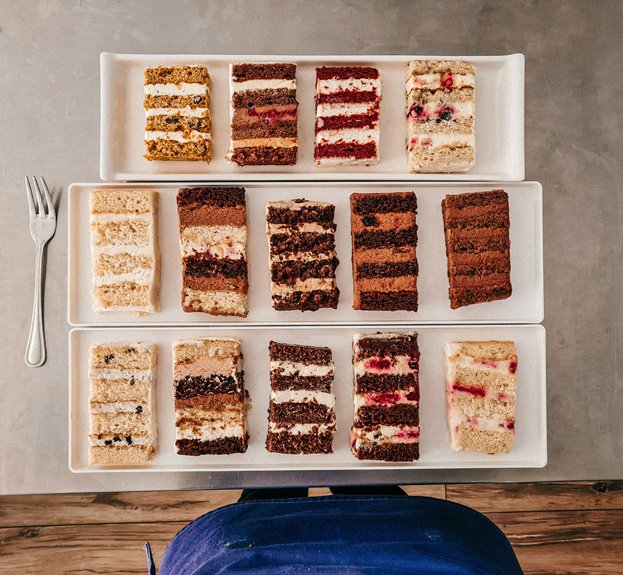
Wedding cake flavor emerges as a deliberate, layered construction built upon almond-kissed vanilla foundations, silky buttercream, and subtle floral notes that bridge comfort with celebration. You’ll recognize it by the golden thread of almond emulsion weaving through white cake layers, delivering bolder, more authentic flavor than extract while resisting heat’s fading touch.
This pale, ethereal profile welcomes bright companions like raspberry curd or lemon brightness, creating tart-silk contrasts that dance across your palate. The magic lies not in flour origin but in architectural layering, where emulsion-led depth supports diverse fillings and mousses. Mastering this balance unlocks the foundational techniques that define classic wedding cake construction.
What Flavor Is Wedding Cake, Really?
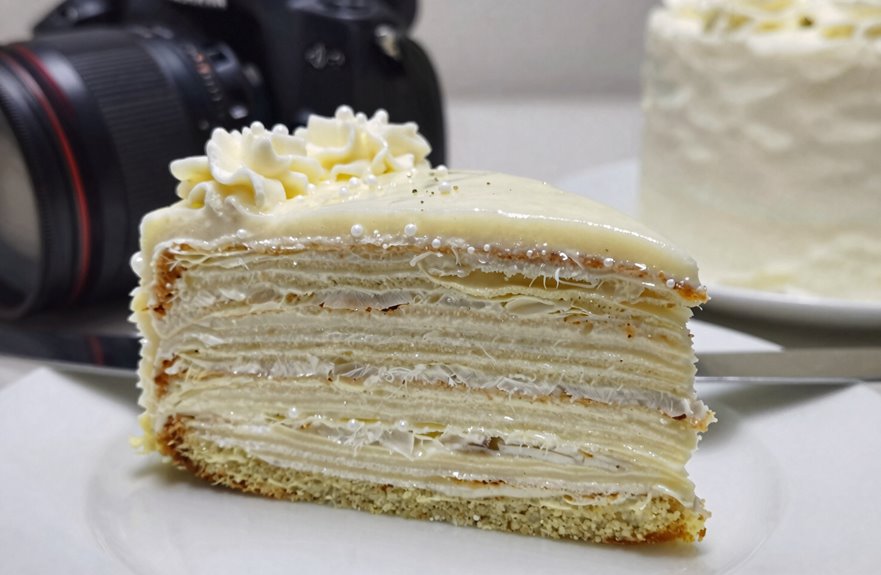
When you slice into what many assume is mere vanilla, you’re actually encountering a carefully orchestrated symphony of almond, butter, and subtle floral notes that have defined celebration for generations. You’re tasting tradition itself: white cake layers, often almond-kissed rather than purely vanilla, cloaked in silky buttercream that melts like sweetened air on your tongue.
You’re joining a lineage of bakers and celebrants who’ve chosen this particular profile, not from lack of imagination, but from collective wisdom. When you select your own wedding cake, you’re not locked into monotony. You’re invited to orchestrate per-tier variations, blending classics like lemon or red velvet with your foundational choice.
Your filling selection becomes the final chord and the lasting impression your guests carry. You’re crafting memory through flavor, participating in something with considerably more complexity than the surface suggests.
Why Does Wedding Cake Taste Like Almond?
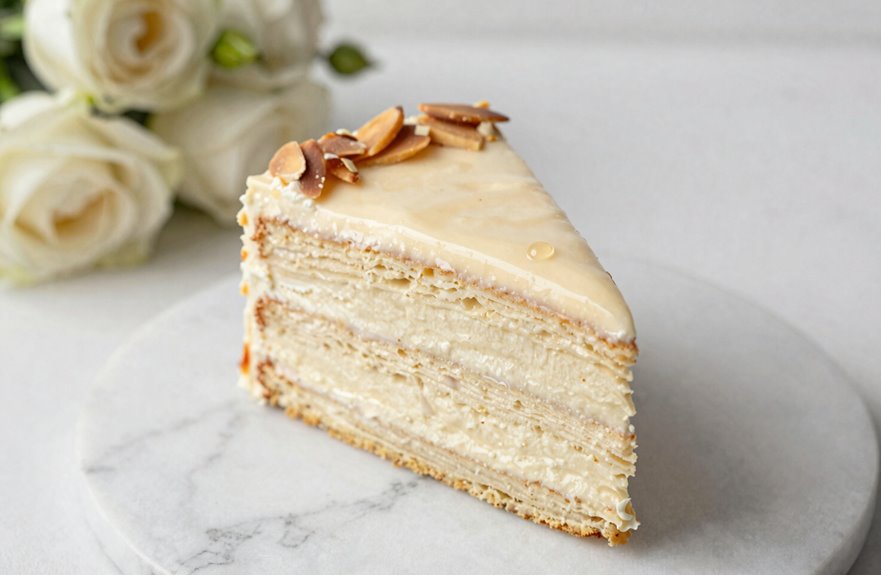
Beneath the smooth fondant and elegant tiers, you’re detecting almond because bakers have long relied on this particular nut’s subtle chemistry to transform ordinary white cake into something truly celebratory.
You’ll find almond flavor woven through wedding cake history like a golden thread, elevating traditional vanilla cake bases into memorable centerpieces. Professional bakers often reach for almond emulsion rather than standard extract, since the pronounced, authentic profile doesn’t fade during baking’s intense heat. The emulsion’s water-based suspension distributes evenly through batter, ensuring each bite carries consistent warmth.
When tasting options, notice how almond bridges familiar comfort and sophisticated distinction. This gentle nuttiness conveys tradition while allowing personal interpretation, whether paired with raspberry filling or standing confidently alone.
Do Box Mixes or Scratch Cakes Make Better Wedding Cake Flavor?
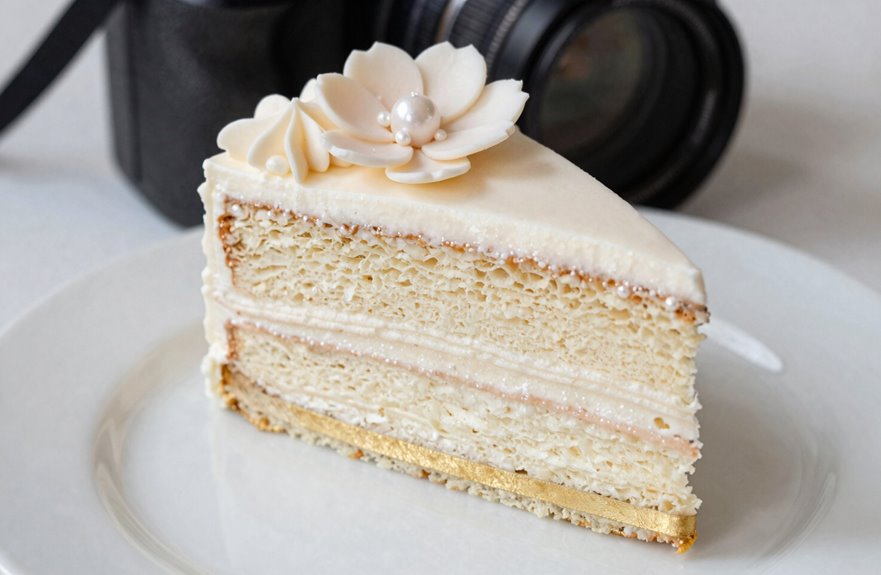
When you stand at this crossroads in your baking journey, scratch baking grants you sovereignty over every variable. You can bloom your own vanilla beans and fold in precisely the right amount of almond emulsion without the preservatives that can dull a cake’s flavor. Box mixes offer consistency like a metronome, giving beginners a reliable foundation while requiring you to supply the flavor alchemy through strategic additions of citrus zests or emulsion-based extracts. Wedding cake excellence emerges not from the origin of your flour, but from how deeply you’re willing to push past the surface. This means either building a scratch batter with the patience of a stonemason or transforming a humble mix through the careful architecture of layered flavors.
Scratch Baking Benefits
The choice between scratch baking and box mixes for your wedding cake isn’t merely a matter of convenience; it’s a decision that shapes every forkful your guests will remember. When you choose scratch, you’re not just mixing ingredients; you’re controlling moisture and texture with precision that box mixes cannot replicate.
You’ll discover that scratch recipes unlock superior flavor fidelity, especially for cherished bases like almond, vanilla, and chocolate. This authenticity creates harmonious marriages with fillings, as your scratch-baked layers embrace raspberry curd or buttercream with structural confidence that supports multi-tier designs. Your cake becomes a signature that is reproducible, memorable, and unmistakably yours. The consistent rise and crumb you achieve through scratch methods transform your wedding cake from dessert into an edible legacy, a sweet reflection of the care you’re bringing to your celebration.
Box Mix Realities
How exactly does a box mix stack up against the careful precision of scratch baking when you’re chasing that quintessential wedding cake flavor? You’ll find that box-mix options often lean heavily on vanilla as their foundation, yet they sometimes miss the mark without your intervention. Emulsions function as potent, water-based flavorings that transform a standard box-mix into something that whispers tradition rather than shouting artificiality. You’re not cheating; you’re adapting, adding almond emulsion to bridge that gap between convenience and authenticity. The box-mix becomes your canvas, not your crutch. When you doctor it thoughtfully, you join countless bakers who’ve discovered that wedding cake flavor depends on intention, technique, and knowing which tools deserve your trust.
Flavor Depth Comparison
Several paths lie before you when building true wedding cake depth, each carrying its own weight of tradition and technique. You’ll find that almond emulsions, with their concentrated, oil-soluble intensity, reveal dimensions that water-based extracts simply cannot reach, transforming even modest bases into something memorable. Flavor depth rarely lives in the crumb alone. Your fillings, silky mousses, curds, or buttercreams, become the true architects of perception, conducting the final notes that linger on the palate. Industry wisdom confirms this symphony approach, offering nineteen flavors and nine fillings as your palette. Whether you begin with box or scratch, you’re not choosing sides; you’re curating combinations. The marriage of components, not the origin of your batter, ultimately determines your creation’s success.
Which Makes Wedding Cake Flavor More Authentic: Emulsion or Extract?
When you’re crafting that signature wedding cake flavor, you’ll face a pivotal choice between emulsion and extract, and understanding their distinct properties will improve your baking results. Emulsions, particularly almond emulsion, offer a bolder, more authentic flavor profile that performs well during tastings, where your cake needs to make an immediate impression on couples sampling multiple competitors. While extracts remain a viable option when emulsions aren’t available, they deliver a gentler flavor rather than the full-bodied intensity that emulsions achieve, much like the difference between a polite handshake and an embrace that leaves a lasting impression.
Emulsion Advantages
Why settle for a whisper when you can coax a full-throated symphony from your wedding cake? You reach for almond emulsion because flavor stability separates the memorable from the forgotten. Unlike fleeting extracts, emulsions anchor themselves in butter and sugar, refusing to evaporate when heat rises or fondant seals the crumb.
| Emulsion Strength | Your Reward |
|---|---|
| Intense almond profile | Depth without bitterness |
| Heat resistance | Unwavering flavor through baking |
| Oil-based suspension | Seamless integration into wedding cake fillings |
You fold LorAnn Bakery Emulsion into buttercream, watching it bloom without curdling. Your layers will taste as intended on the first anniversary bite. This is your craft: deliberate, precise, and effective.
Extract Alternatives
How do you choose between emulsion and extract when the goal is that unmistakable wedding cake essence? Almond emulsion stands as your faithful companion in this pursuit, offering superior flavor stability through heat and time where almond extract might quietly fade into the background. When you’re building those towering tiers meant to impress guests for hours, emulsions anchor that nutty warmth like roots in rich soil. Extracts, though acceptable, sometimes whisper where emulsions sing. Think of almond emulsion as your foundation stone and almond extract as your backup plan when the specialty shop shelves run bare. For that classic almond-vanilla marriage defining authentic wedding cake, reach first for emulsion’s lasting embrace. Your layers deserve nothing less than flavor that endures from first cut to final crumb.
What Classic Wedding Cake Flavors Work Besides Vanilla?
Where might your palate wander once you’ve moved past vanilla’s gentle embrace. You’ll find established alternatives that have graced celebration tables for generations. Chocolate stands as vanilla’s most faithful companion, offering deep, resonant notes that anchor multi-tiered creations with broad appeal. When you seek something more nuanced, almond emerges as a layered option, its delicate, nutty essence often combining with vanilla itself in classic almond-vanilla combinations. Marble cake bridges both foundational flavors, swirling them into harmonious ribbons so your guests need not choose. Red velvet delivers subtle cocoa depth with visual impact, and bright lemon cuts through sweetness with clarity. These options represent a lineage of bakers who’ve balanced innovation with the comfort of recognition.
How Do Bakers Add Wedding Cake Flavor Without Darkening the Cake?
The pursuit of a pale, ethereal cake demands more than simply eschewing chocolate. Flavor and appearance can work together effectively without compromise. Begin by selecting white or almond-flavored bases, steering clear of cocoa while welcoming the clean canvas of vanilla.
When deepening taste without deepening color, reach for almond emulsion rather than traditional extracts. This water-based ingredient holds its essence steady through baking’s heat without caramelizing into amber tones. Weave brightness through light fillings; perhaps lemon curd’s sunny disposition or white chocolate mousse’s creamy texture. Each layer demonstrates the value of restraint.
The finishing touch arrives through pale frostings like Swiss meringue buttercream, its satin sheen wrapping the cake in edible starlight. This approach achieves depth without darkness and character without compromise through careful ingredient selection.
How Do You Make Wedding Cake Flavor at Home?
Perhaps you’re standing in your kitchen, measuring cups at the ready, wondering how to capture that ethereal quality professional bakers achieve in tiered celebration cakes. You start with a vanilla-almond base, swapping almond extract for emulsion. This substitution provides depth without bitterness, and the scent lingers subtly. Six to nine months before your celebration, you’ll test combinations, discovering which fillings and frostings work best with your cake.
- Let raspberry whisper against buttercream, a marriage of tart and silk
- Feel ganache’s dark embrace, sophisticated and sure
- Use mousse to hold its shape, delicate yet determined
You’re not merely baking; you’re weaving tradition through your fingers. Each tier becomes a testament to your craftsmanship and your love story rising.
Why Do So Many Wedding Cakes Include Lemon or Citrus?
Why do wedding planners and pastry chefs alike return to citrus with such devotion, season after season? Lemon transforms the familiar into something memorable, cutting through sweetness like sunlight through silk. Citrus offers brightness that vanilla alone cannot achieve, balancing buttercream’s richness with acidic precision. Lemon pairs well with raspberry curd for spring ceremonies, or stands against dark chocolate tiers where its zest creates contrast like a well-placed comma in a run-on sentence. The trend toward lemon-raspberry in 2026 reflects a genuine preference: people value refreshing flavors in celebration meals. An outdoor August reception benefits from citrus’s stability under heat, where heavier flavors deteriorate. This is a functional choice based on flavor science, not fashion trend.
How Do You Pick the Right Wedding Cake Flavor for Your Wedding?
Where do you even begin when the menu stretches before you, dense with possibility and pressure? Start by anchoring yourself in vanilla and chocolate, those twin pillars that welcome every palate, then branch outward into flavor profiles that reflect your story.
- Trust your season, letting lemon sing in June or spice warm November’s chill
- Layer courage through fillings, where almond emulsion lingers like a secret kept
- Build belonging tier by tier, nineteen bases becoming nine shared memories
You’re crafting more than dessert; you’re composing communion. When guests taste your choices, they’ll recognize themselves in the crumb. This connection creates the memorable eating experience you’re aiming for.