
The right Christmas party game depends on how much setup time you actually have before guests arrive.
Most of these need under fifteen minutes if you plan the order right, though the word scramble takes longer to prepare than to play and should be typed the night before.
A gingerbread house contest collapses without pre-assembled kits, and a candy cane hunt turns into chaos unless you fence off the kitchen and set point values by wrapper color so a sharp-eyed seven-year-old can edge out a toddler scooping minis.
1. Gingerbread House Decorating
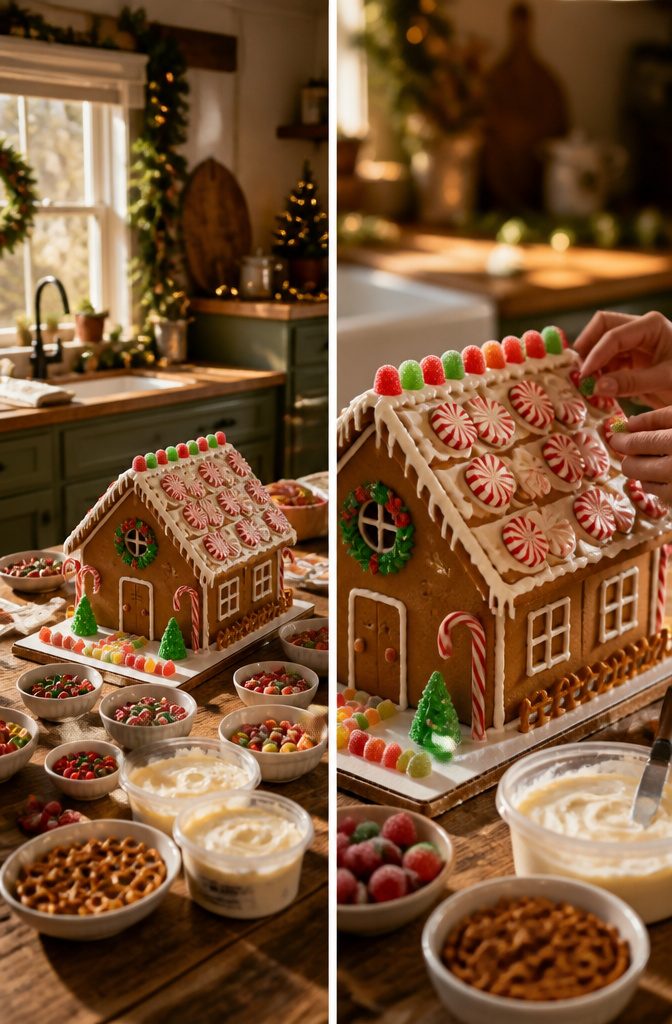
A gingerbread house contest works best when you hand people the structure and let them fight over the candy. Pre-assembled kits save the grief of collapsed walls and give teams a solid base to decorate within a set time limit.
The competitive edge comes from categories like "Most Architectural" and "Best Winter Wonderland" so multiple groups can win rather than crowning one champion and a roomful of losers.
Supplies are straightforward: gingerbread house kits, tubs of frosting thick enough to act as mortar, and piles of decorating supplies.
Icing tubes, gumdrops, peppermint shingles, pretzel fences, shredded coconut snow. The frosting needs to hold its shape; runny royal icing slides off roofs and pools on the table.
Judging can be a single vote or a panel. If you want to keep peace at a family party, let guests cast ballots in each category.
For a work gathering, appoint two or three judges and photograph every house before anyone starts nibbling. The timer raises the stakes, but fifteen minutes is plenty; longer and the frosting crusts, shorter and the details never happen.

Festive Holiday Sprinkle Assortment – A merry collection of gold stars, green trees, red-and-white candy canes, white snowflakes, and red-green-white chocolates for all your Christmas baking fun.

HOLIDAY JOY WITH FAMILY: famous and easy-to-use festive gingerbread cookies; Decorating fun for the entire family; it’s the traditional and perfect activity to keep the kids pleasantly entertained, traditional gingerbread with joyful holiday celebration memories

Complete DIY Gingerbread House Kit (1.6 lbs): Includes everything you need—pre-baked gingerbread panels, colorful candies, and white icing for decorating and assembling your festive masterpiece.
2. Christmas Charades

Christmas charades works the same way the classic party game always has, except every phrase or title on the slips of paper carries a holiday angle.
One player draws a card and acts out "Home Alone" or "Silent Night" or building a snow angel while their team shouts guesses against a timer.
No speaking, no mouthing words, just gestures and the occasional frantic pantomime of a Christmas tree.
The prompts can run from Christmas movies and songs to traditions and characters, mixing modern references with older ones so teenagers and grandparents draw cards they actually recognize.
What makes this one worth keeping in the rotation is how little it demands from anyone.
You need paper, a pen, and a phone timer. No board, no batteries, no sitting in a circle reading rules.
I have watched a room of adults fall apart over someone trying to mime "The Polar Express" in under sixty seconds, and the same setup works for a mixed-age group with simpler prompts for younger kids.
For adults, lean into the obscure holiday films and carols nobody remembers the words to. For all-ages gatherings, pull back to physical things anyone can act out: decorating cookies, shaking presents, getting tangled in lights.
The game adapts to the crowd without changing its bones, which is why it keeps showing up at parties where half the guests did not plan to play anything at all.

Bakery-Style Results: Wilton Royal Icing helps you achieve bakery-style results for cake, cupcake, and sugar cookie icing; it also sets in a way that allows cookies to be stacked on top of each other

Resealable pouch. It’s easy to mix just add water!

Multi Uses - Our Goloho easy squeeze bottles set is useful for a wide array of purposes, designed to meet the demanding need of precision cake and cookie decorating, creating pancake art and crafts, holding a variety of liquids including sauce, condiments, chocolate, oil, vinegar, massage oil and more. Works well with cookie cutters, icing pens and piping bags for cookie icing.
3. Christmas Trivia
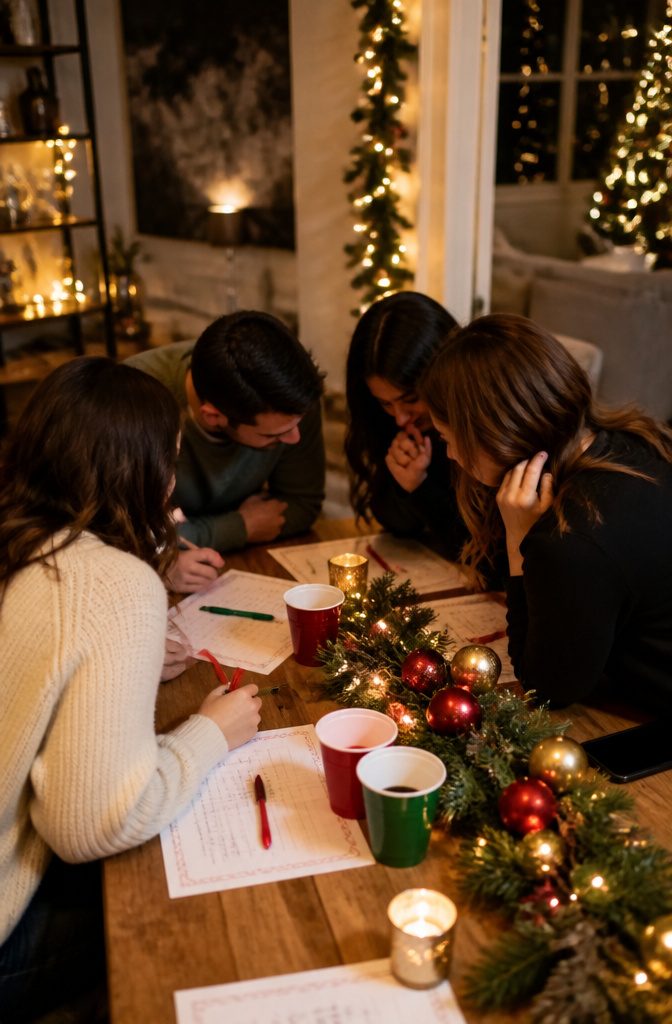
Splitting the room into teams of four to six people keeps the energy up without letting anyone disappear into a crowd.
I have seen groups of eight or more where half the team never speaks, and pairs where one dominant player does all the work.
Four to six hits the sweet spot: enough brains to cover gaps, small enough that everyone argues over the answer sheet.
The questions themselves matter more than the scoring.
A twelve-year-old and a sixty-year-old are sharing a team, so mix easy recall with harder detail rather than front-loading the tough stuff. I lean toward holiday movies, carols, and food traditions over historical dates or geography.
Someone always knows the line from Home Alone, and someone else always remembers which country claims Christmas Island. The 1965 broadcast of "Jingle Bells" from space works because it sounds fake enough to spark debate.
Twenty questions fills about thirty to forty-five minutes without dragging.
Hand out answer sheets, let teams confer in whispers, and collect everything before the arguing starts. A small prize helps, though in my experience the bragging rights do most of the heavy lifting.

TRAVEL SIZE: Christmas Charades card game is the perfect game to take on the road or stuff it in a stocking!

WE MAKE IT EASY: No more time spent thinking up good charades - the fun starts as soon as the box is opened.

GREAT FOR PARTIES AND FAMILIES: Instant fun and laughter for a party or the entire family.
4. White Elephant Gift Exchange
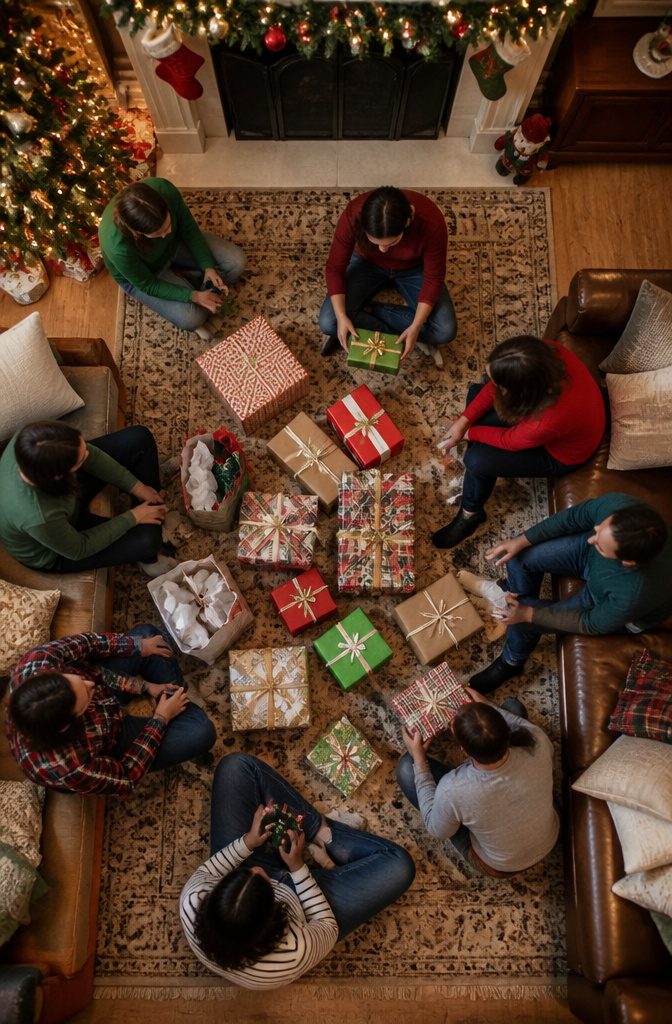
A White Elephant exchange works best with six to twenty people, each bringing one wrapped gift. The group sits in a circle, gifts piled in the center, and draws numbers to set the order.
The first player picks any gift and unwraps it. Everyone after that faces a choice: open a new wrapped gift or steal one already in the open.
The stealing is where the tension lives. Take someone’s opened candle set and they must immediately choose again, either unwrapping something new or stealing from another player.
Each gift can change hands three times total; after that, it stays put with whoever holds it. The first player to go, who otherwise had the worst position, gets one final steal once every gift is open.
Set a price limit beforehand, and lean into gifts that are funny or genuinely useful. The budget keeps the exchange fair; the humor keeps people willing to risk a steal.


Used Widely in Life: Ideal for cooking, classroom use, game time, exercising timer(yoga), kids brushing timer and timing kids' study. They help your kids do things more efficiently and develop a strong sense of time

5. Christmas Pictionary
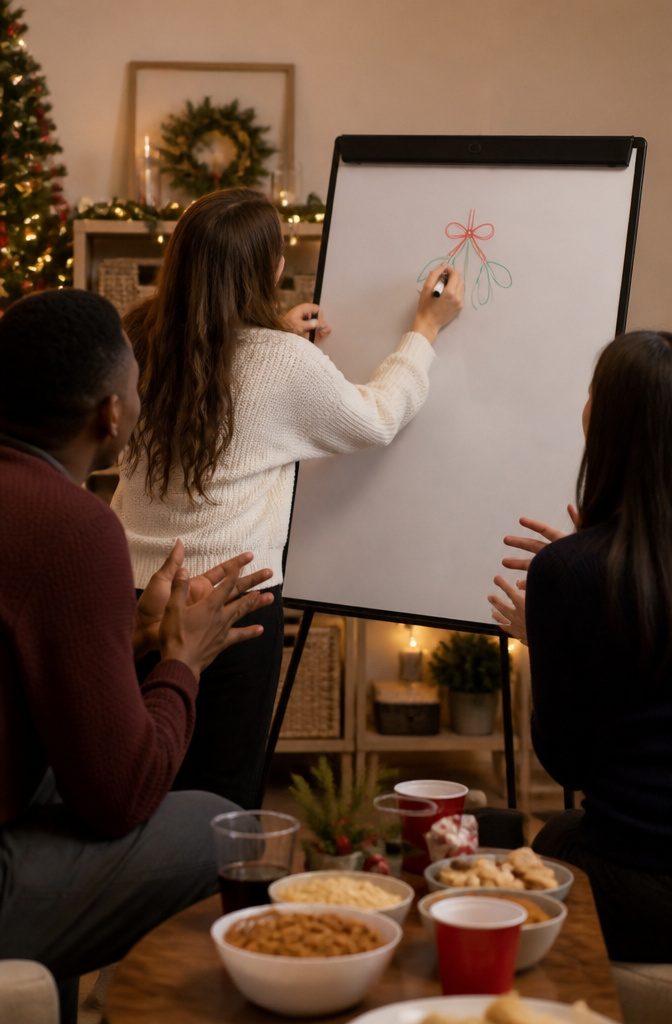
Christmas Pictionary works best when you split the room into two teams and hand one player a marker or pencil while their teammates shout guesses.
A whiteboard or flipchart keeps the drawings visible to everyone, though a pad of paper passed around works fine in a smaller space.
Set the timer to about a minute so nobody gets stuck laboring over a sketch of "nutcracker" while the room goes quiet.
The prompts matter more than the art. Holiday phrases like "mistletoe" or "Secret Santa" land better than generic winter words, and they keep the energy tied to the night itself.
For younger children who cannot read yet, whisper the phrase in their ear or swap to simple picture cards they can copy.
The grown-ups on their team will still guess, and the child gets the same rush of hearing their teammates yell the right answer before the buzzer.
The team with the most correct guesses at the end takes whatever prize you have lying around, though in my experience the bragging rights do most of the work.

Game Overview: Share the legend of the candy cane and play this interactive, faith-filled game designed for 2-6 players

Rich Set: the Christmas party game package contains 24 spoons and 24 Christmas themed balls, the quantity is sufficient for groups of people to enjoy, to ensure people be immersed in the fun of the game
6. Santa Limbo

A broomstick works better than you’d expect for the pole, or a string of Christmas lights if you want something that glows. Two people hold the ends and lower it a couple of inches after each round.
Players bend backward, belly up, and shuffle under without touching. The one who clears the lowest height wins.
The pillow-under-the-shirt detail from the classic version, mimicking Santa’s cookie-fed belly, adds just enough absurdity that people stop worrying about looking silly. It also shifts the center of gravity forward, which changes how you arch.
For anyone with back or hip limitations, the belly can come off and the pole can stay at shoulder height throughout; players duck under normally instead of bending backward, and the game stays competitive without the spinal compression.
Music matters more than you’d think. Holiday tunes running underneath keep the rhythm loose and cover the awkward grunts.

GINGERBREAD DECORATING KIT: Create whimsical gingerbread houses in a snap with the Colorations Decorating Kit! The self-adhesive foam Christmas shapes are easy to attach to boxes, birdhouses, containers, or even brown construction paper

Pre-Baked & Ready to Build Save time and skip the mess — each gingerbread house is pre-baked and ready for decorating. The panels fit perfectly for easy assembly, making this the ideal craft for kids and adults. Create festive displays or edible centerpieces without baking or mixing. Perfect for cozy family nights, classrooms, or holiday parties, this convenient kit lets you focus on the fun of decorating.

11.31 oz Complete Decorating Kit – Everything you need in one box: 3 squeeze frosting tubes (3 oz each in Orange, Black, White), 4 decorating nozzles, and a 2 oz Halloween sprinkle mix with candy eyeballs.
7. Candy Cane Hunt
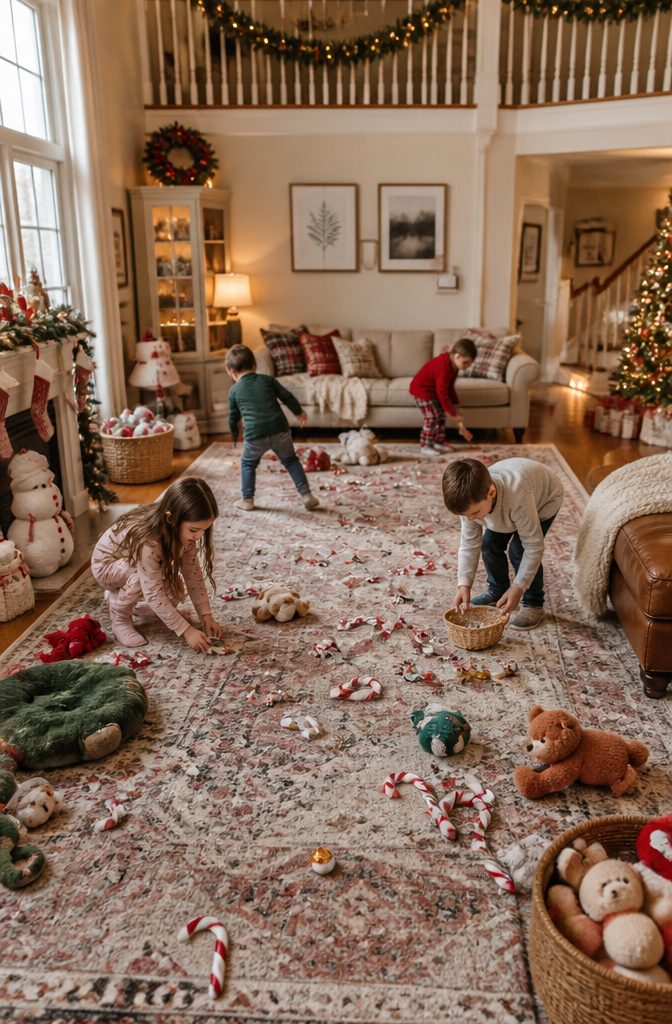
A candy cane hunt works the same muscle as an Easter egg hunt, but the peppermint shape hides differently and the scoring keeps older kids from bulldozing toddlers.
Assign point values by size or wrapper color: a full-size cane in foil might be worth five points, a mini hooked candy worth one.
That way a sharp-eyed seven-year-old with two big finds can edge out a four-year-old scooping armfuls of minis.
Boundaries matter more than clever hiding spots. Fence off the kitchen if the stove is on, keep the hunt out of bedrooms unless you want drawers rifled, and decide upfront whether couch cushions and potted plants are fair game.
I have watched a supposedly living-room-only hunt migrate into a bathroom because nobody said stop at the door.
Count out roughly ten candy canes per player, split between sizes so the scoring actually functions.
Hide the high-value ones in spots that take a second glance: the spine of a cookbook, hooked over a curtain rod, wedged in a wreath.
Scatter the one-pointers in plain sight so younger kids stay in the game. Let everyone keep what they find, or keep a small prize for the highest total if you want to avoid sugar overload.

Simply stir until smooth, transfer into a piping bag and decorate! Add water to achieve a thinner consistency for flooding cookies.

VERSATILE ROYAL ICING Adjust the amount of water added to our icing mix to achieve any consistency you desire. Use a thicker texture to create flowers, leaves, and decorations that need to hold their shape. This consistency also makes assembling gingerbread houses a breeze! Add a bit more water to create the ideal piping consistency for borders, outlines, ornate details, and lettering. Simply add even more water to obtain flood icing when you need to smoothly coat cutout sugar cookies.

【What you will get?】:Packing including 100 pieces 14Inch Disposable Piping Pastry Bag , 10 pieces silicone pastry bag ties, 10 Piesces Scriber Needle and 2 Tip Clips , with which you can create all types of patterns on cake.
8. Snowman Building Contest

A snowman building contest works anywhere if you plan for your actual weather.
For real snow, you’ll need a measuring tape, a carrot, a hat and scarf, plus a few oddball accessories so teams can build personality into their creations rather than three identical spheres.
Set a hard time limit, around 15 to 20 minutes, then judge on categories like Most Original and Most Holiday Spirit rather than pure size, since snow quality varies block by block.
No snow on the ground? The indoor version is honestly more chaotic and usually gets louder laughs.
Split guests into teams and wrap one volunteer head to toe in toilet paper, then add the same hat, scarf, and accessories to turn a person into a "snowman."
Same judging criteria apply, though the waddling and shedding add their own entertainment value.
For either version, keep the rules loose. The source pages that rank highest emphasize inventive themes over technical perfection, and that freedom matters more than the material you start with.

Charades Game for Family, kids & Game Night: Picture your child pretending to be a busy little elf while the family tries to guess through the giggles! A fun pick for Christmas games for family, Santa gifts for kids, or Christmas Eve box - ages 6 & up

Christmas Charades Card package included 60 Charades,The actions and items are commonly found in daily life,4 Blank Cards for You to Customize Your Own Charades

Festive Family Fun:This charades game for family gatherings features 48 Christmas-themed cards. Players use gestures and expressions to act out holiday prompts like Santa, creating joyful memories without screens.
9. Christmas Bingo
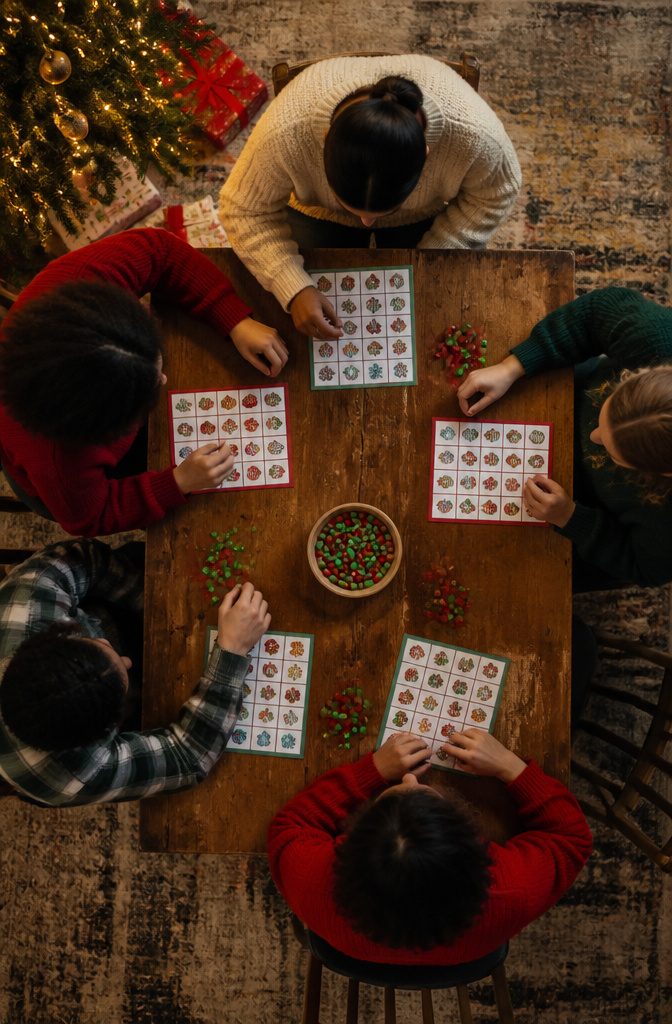
Bingo cards built around Christmas symbols pull everyone in without asking for any skill.
I make mine at home with a grid of five by five squares, filling the center as a free space and scattering pictures of candy canes, presents, snowmen, and Santa across the rest.
Picture cards keep younger children in the game alongside adults using word cards, so the same round works across a wide age range at a family party.
For markers, small candy pieces do the job and disappear naturally as the game goes on.
When I call out a symbol, adding a quick sound effect keeps the room alert: a "ho ho ho" for Santa, a shake of jingle bells for a sleigh.
The first player to fill five in a row calls out "Santa Bingo!" or plain "Bingo!" depending on the crowd.
Prizes stay small and festive.
Candy canes, holiday stickers, or a chocolate Santa work fine; the win matters more than the value. I print cards on regular paper and slip them inside sheet protectors so dry-erase markers wipe clean for the next round.

Package Includes: The 5-Second Game set includes 72 question cards(3.5x2 inches), 1 inctruction card(5x7 inches) and a 5-second hourglass(1.5x7 inches)

Waterproof LED String Lights: Battery case is designed with IP44 waterproof structure, battery box can against wet under splashing water at any angle and you can easily carry and place the LED string lights anywhere you like, no worry about rain, snow or other bad weather

10. Holiday Scavenger Hunt
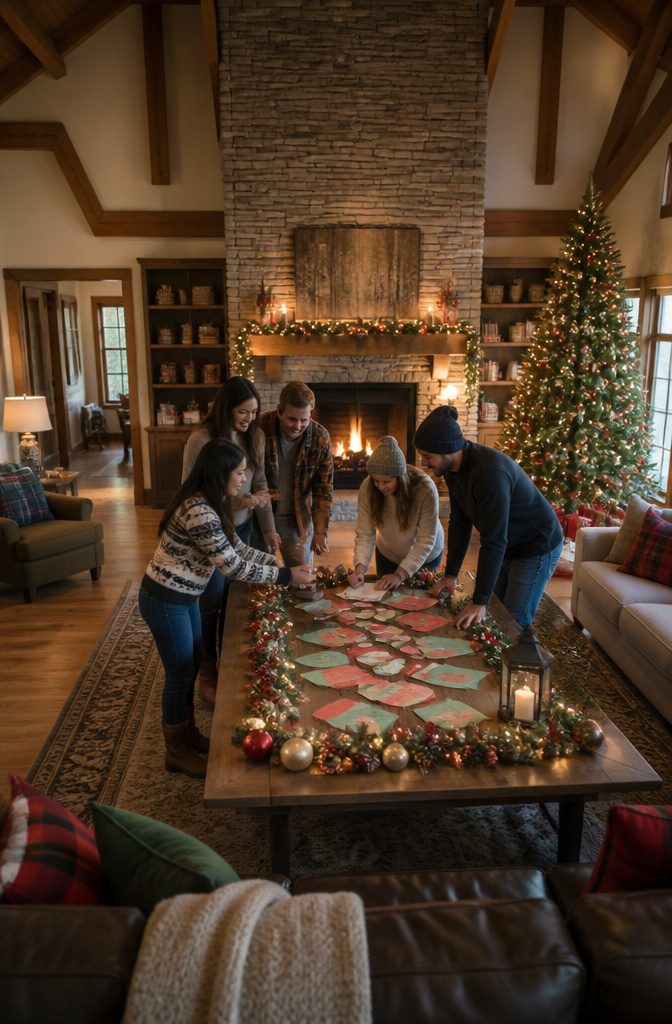
A scavenger hunt works at almost any Christmas gathering because you control the difficulty with nothing more than the clues.
For adults, I write riddles that lean on wordplay or office inside jokes: "Where morning caffeine meets afternoon regret" points to the break-room coffee maker.
For kids, the same hunt uses pictures or simple directional steps: "Look under the red pillow in the living room."
The items themselves stay holiday-themed either way, a mix of small ornaments, candy canes, and one "golden" prize that earns a Santa sack surprise for the winning team.
Most hunts run 20 to 30 minutes, which is long enough to feel like a real competition without losing the room to snack breaks or side conversations.
I usually cap teams at four people so everyone stays involved, and I keep one or two backup clues in my pocket in case a hiding spot turns out to be too clever.
The first group to return with every item checked off wins, though at family parties I sometimes slip consolation treats into the final clue location so stragglers don’t leave empty-handed.
11. Minute to Win It Games
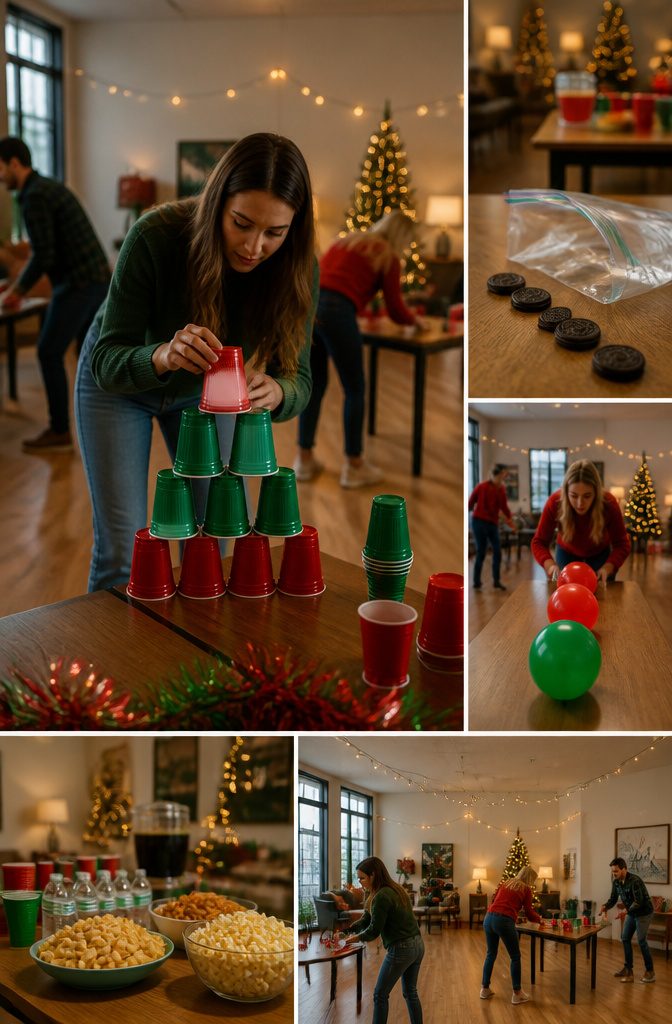
The best Minute to Win It setup runs three or four stations at once so nobody stands around. I rotate small groups through every sixty seconds, which keeps the energy high and the awkward waiting low.
One table gets the cup stack: ten plastic cups, upstack and downstack in one minute flat.
No fumbling with rules, just speed. Another station runs the cookie forehead transfer, which I first saw described as a gingerbread shuffle but works with any small store-bought cookie.
Players start with it balanced on their forehead and work it to their mouth without hands. Most drop it on their chin at least once.
The third station is balloon keep-up: three balloons in the air, no holding, no letting any touch the floor. It sounds simple until the third balloon joins and chaos takes over.
Supplies stay cheap. Plastic cups, a bag of cookies from Walmart that runs about a dollar, balloons, and a phone timer.
The cookie bag usually leaves plenty extra; I have crushed the remainder into a crumble crust for cheesecake, which saves the waste and gives me a second dessert without extra shopping.
12. Christmas Karaoke
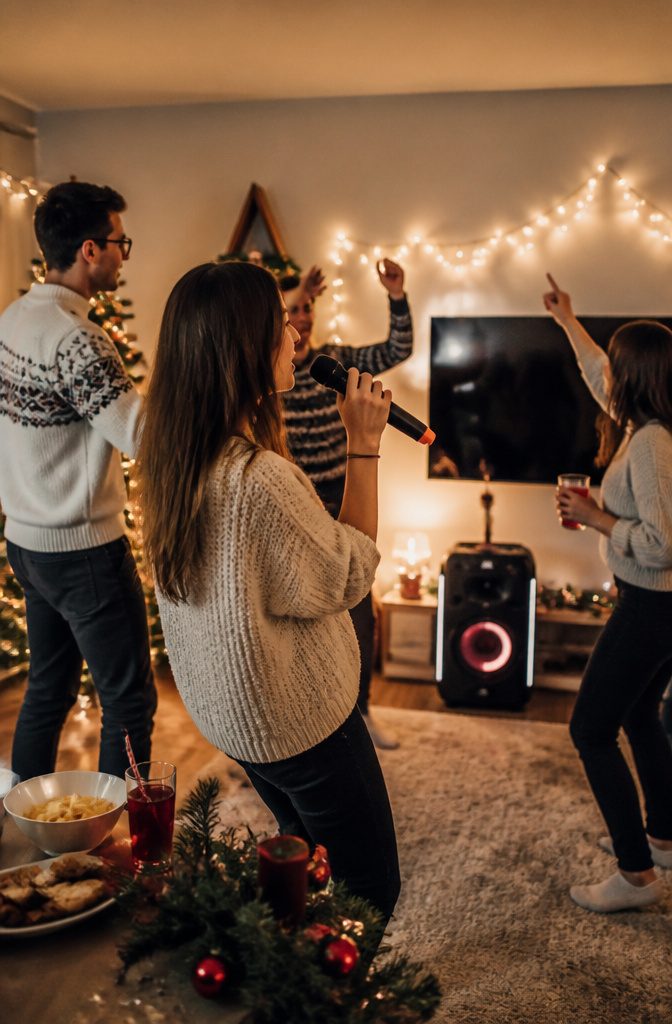
A karaoke machine and a phone app both work fine for holiday karaoke, so use whichever you already own.
The app route costs nothing if you have a Bluetooth speaker lying around, and the lyrics display on a TV through screen mirroring.
A dedicated machine has the edge for office parties because the microphones feel more official in hand, which matters more than it should.
The song list writes itself: "All I Want for Christmas Is You," "Last Christmas," "Do They Know It’s Christmas?," "Step into Christmas," and "Rockin’ Around the Christmas Tree" cover enough range that someone will bite.
The trick for shy singers is to let them pick a duet partner before they can refuse outright; pairing the hesitant with the eager keeps the room moving.
For adult groups, add a judging panel or audience vote, though scoring on enthusiasm beats scoring on pitch every time. Costumes help too, even if it’s just a Santa hat pulled from the decoration bin.
This one scales well from six people to sixty, which is why it keeps showing up at office parties.
The cleanup is zero, the setup takes ten minutes, and the only material you truly need is a playlist and some way to project it.
13. Ornament Decorating Contest
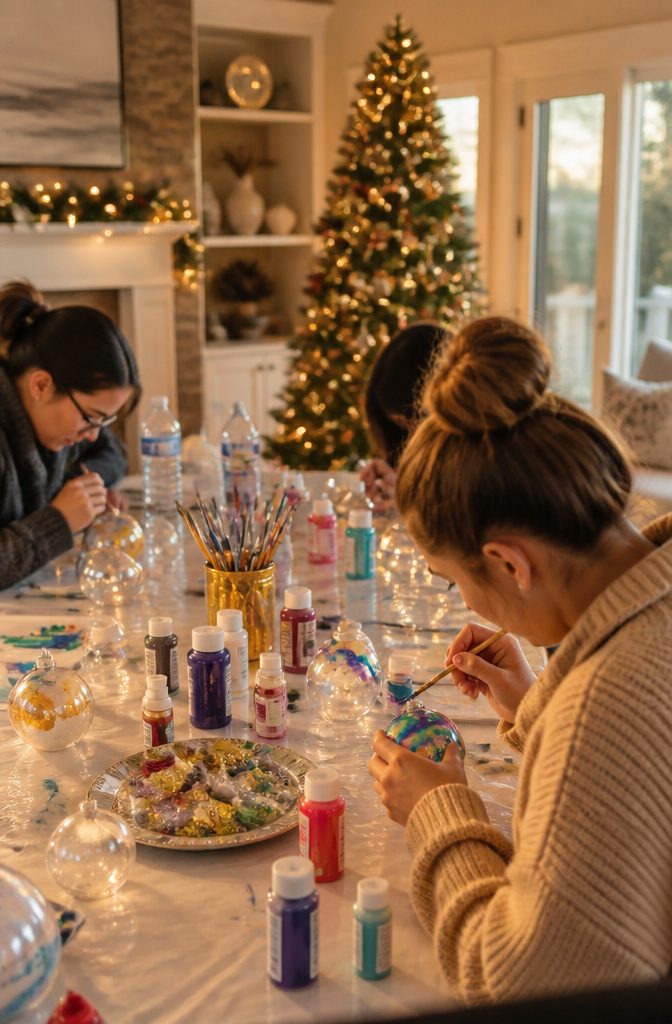
Plain glass ball ornaments run about three to a dollar at most craft stores during November, and that is the only math that matters.
Buy one per guest plus a few extras for the inevitable drop, then spread them across a table with acrylic paints, paint pens, glitter glue, and whatever ribbon scraps you have left from wrapping.
Set the timer for twenty minutes. That is enough time to get paint down without letting second-guessing take over, and the limit is what makes it a game instead of a craft project that drags through dinner.
Judging works best with categories borrowed from the usual kit contests: Most Creative, Most Festive, and one wild card like Best Non-Traditional Color Scheme.
Hand out a few dollar-store prizes or just bragging rights; the ornament itself is the real takeaway.
Guests sign the back with a paint pen before the paint dries, and everyone leaves with a decoration that will actually make it onto next year’s tree.
14. Santa Says

Santa Says works exactly like the classic Simon Says, except the caller wears a Santa hat and the commands wear a holiday costume.
"Santa says touch your red nose" or "Santa says march like a toy soldier" keeps the structure familiar while the theme does the heavy lifting.
I’ve watched this fall apart when the commands get too clever; kids under six are still mastering the logic of the original game, so layered jokes land flat and the room dissolves into chaos.
The age split is the real test. Pure Santa Says, with its physical commands and simple trickery, tops out around second grade.
For a group that mixes preschoolers with older siblings, I shift the older kids into caller rotation rather than player rotation. They get the hat, they write the commands, and the little ones stay engaged without feeling outmatched.
Another workable fix: let the older kids act as "reindeer spotters" who catch the mistakes the youngest players miss, which keeps everyone in motion without forcing the same cognitive load on every age.
15. Holiday Photo Booth

A blank wall behind the couch or the back of a hollow-core door can become the frame for a photo booth with nothing more than wrapping paper or a thrifted bedsheet pinned up as a backdrop.
I learned the hard way that creases read on camera, so steam or clip the fabric tight and weight the bottom hem with a line of tape.
Props live well in a cardboard box: paper Santa beards, antler headbands from the dollar store, and a couple of hand-lettered speech-bubble signs on sticks. The box stays near the backdrop so guests do not have to hunt.
A phone on a cheap tripod does the job; set it to portrait mode and leave the timer at ten seconds so groups can scramble into frame.
Someone always volunteers to press the button for strangers, which keeps the line moving. By hour two of the party the booth runs itself, with people drifting back between drinks to snap another round.
Afterward, start a shared album in whatever app your crowd already uses, or air-drop the batch to whoever asks before you delete them.
The photos that matter to people are the ones they took themselves, not the staged shots you planned.
Prizes That Work
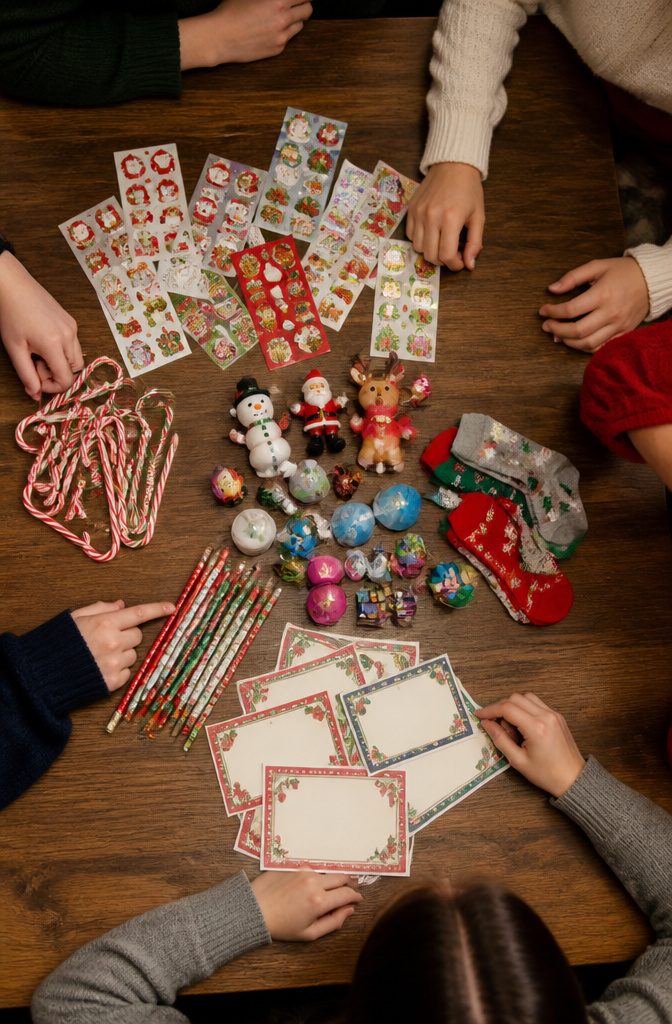
Small prizes pull people into the moment better than bragging rights alone.
A candy cane for the winner of a hooking game, festive stickers for the child who fills a bingo row first, a handmade certificate naming the "Most Architectural" gingerbread build.
The value should match the crowd: a peppermint stick thrills a six-year-old at a family party, while a $5 gift card lands flat at a work event where adults drove across town.
For mixed-age groups, tier it. Kids keep whatever candy canes they find in a hunt; adults compete for a single better item.
Multiple categories help too. "Best Winter Wonderland" and "Most Creative" spread the wins so latecomers do not check out before the last round starts.
Keep every prize edible, usable, or trashable within a week. Nobody needs another ceramic Santa cluttering a drawer until spring.
Team Formats
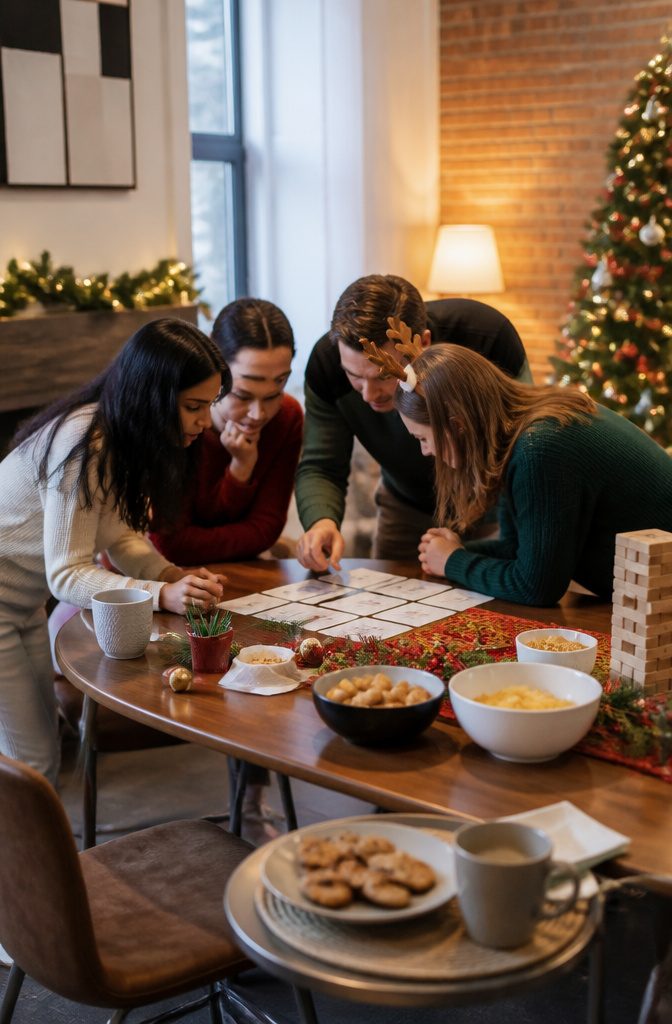
Most Christmas games land harder when you split the room into teams.
The snowman building competition works because four hands shape a better snowman than two, and the deck-the-halls design competition turns office corners into rival winter wonderlands when groups compete to transform their assigned sections.
Dividing teams fairly matters more than the game itself: for family gatherings, draw names from a Santa hat to keep cousins from clumping together, and at work parties, mix departments so the accounting team does not face off against marketing every round.
Team formats also solve the wallflower problem. In Christmas trivia or a Family Feud setup, the quiet guest who would never volunteer solo can whisper an answer to a teammate instead.
The relay pressure of a gift-wrap race or a stocking-fill competition means even hesitant players get pulled into the action by the group’s momentum.
I have watched the same shy relative sit out three straight solo games, then suddenly shout reindeer names across a trivia table once the points counted for a team.
Setup and Materials
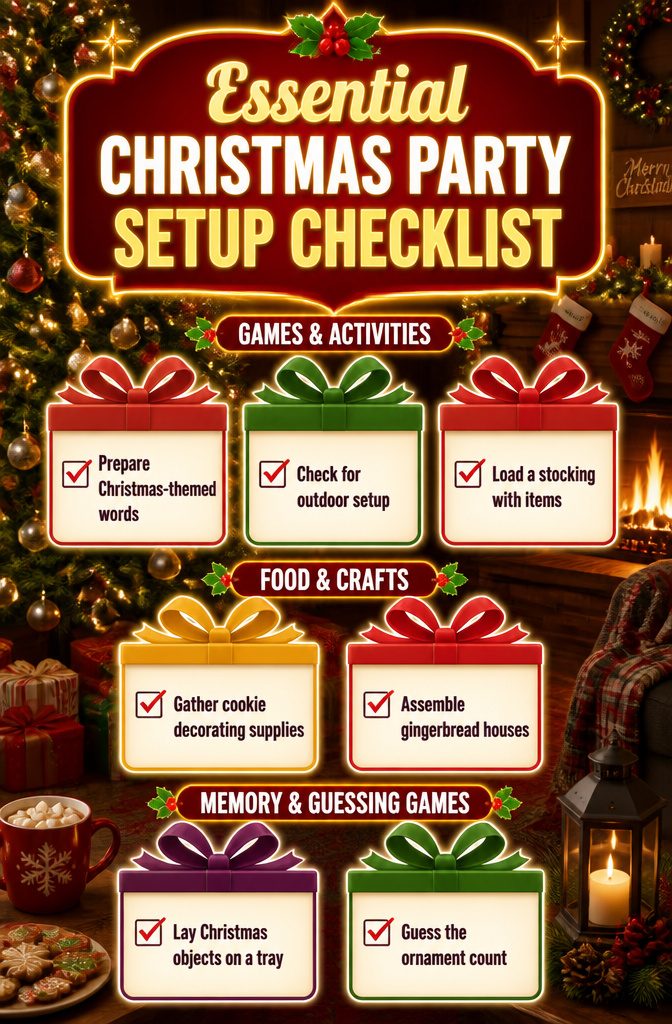
Most Christmas party games need less than fifteen minutes of setup if you plan them in the right order.
The word scramble that keeps guests busy for ten to fifteen minutes actually takes longer to prepare than to play: typing and scrambling thirty to forty Christmas-themed words is the bulk of the work, and it pays to knock that out the night before.
For young children, the simpler games win on setup time. Santa Says, Freeze Dance, and Christmas Bingo need almost nothing beyond the space to move, which matters when a five-year-old’s attention span tops out at five to ten minutes anyway.
The tactile games ask more of your pantry than your schedule. Cookie decorating and gingerbread house competitions need ingredients you probably already bought, and the cleanup is honest work: frosting bowls, scattered sprinkles, and the inevitable floor casualties.
The whipped-cream tree game moves even faster, one can of Reddi-Wip and one paper plate per player, done in a minute flat with no real cleanup beyond the plates themselves.
Save the ice sculpture build for outdoors: freeze colored water in ice-cube trays, jello molds, and yogurt containers ahead of time, then set everything on outdoor tables and let people assemble.
The prep is passive, but the melting means this one stays outside.
Memory and guessing games use what you own.
Load a stocking with household items, lay Christmas objects on a tray, or have guests guess the ornament count on your tree as they arrive. No purchase, no setup clock, just the counting and the writing down.
Outdoor Game Options
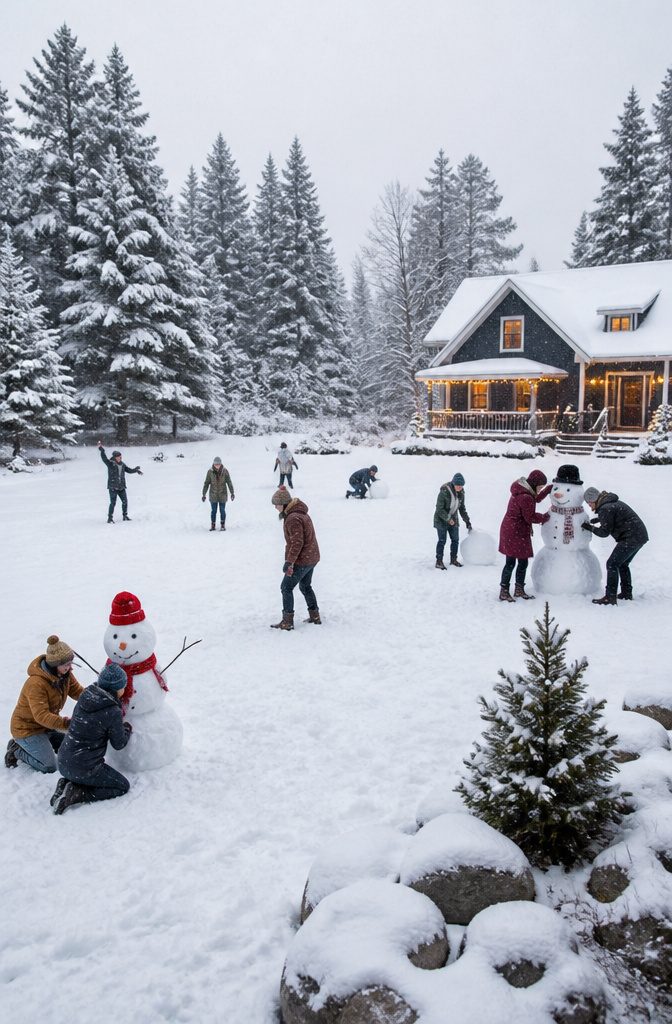
Snowball fights are the obvious draw when the ground is white, but the setup matters more than most hosts bother with.
Divide the yard into two zones with a rope or garden hose, give each team a stockpile of snowballs and a five-minute timer, and the chaos stays friendly.
For a snowman building competition, the judges need real categories to work from.
"Most Original" and "Most Holiday Spirit" keep the voting from defaulting to tallest or roundest, and the accessories make the difference: hats, scarves, carrots for noses, plus one unexpected item per team that forces actual creativity.
When the weather refuses to cooperate, white ping pong balls or marshmallows substitute neatly for snow in a bucket-toss game.
Set the buckets at varying distances and score by difficulty, same as you would with real snowballs. No mittens, no frozen fingers, and the cleanup is a broom instead of a thawing puddle.
One indoor adaptation I have seen work: wrap a teammate in toilet paper, add the hat and scarf, and judge the "snowman" on speed and style.
It is silly, it photographs well, and it runs in a living room without damaging the furniture.
Frequently Asked Questions
What are some fun Christmas party games for adults?
Christmas trivia, charades, White Elephant gift exchanges, and karaoke all work well for adult groups.
Trivia splits into teams of four to six so everyone stays involved, while karaoke pairs shy singers with eager duet partners to keep the room moving.
For competitive groups, add a judging panel to Pictionary or score holiday movie knowledge instead of just singing pitch.
How can I make Christmas games inclusive for all ages?
Choose games that scale naturally, like Christmas Bingo with picture cards for young children and word cards for adults. For Santa Says, let older kids write commands or act as reindeer spotters rather than competing directly against preschoolers.
In physical games like Santa Limbo, offer a shoulder-height pole for anyone with back or hip limitations so they duck under normally instead of bending backward.
What supplies do I need for a gingerbread house decorating contest?
Pre-assembled gingerbread house kits eliminate collapsed walls, plus tubs of thick frosting that holds its shape as mortar.
Pile on decorating supplies like icing tubes, gumdrops, peppermint shingles, pretzel fences, and shredded coconut for snow. Set a timer for about fifteen minutes so details happen before the frosting crusts.
What are the best Christmas games for kids?
Santa Says, Freeze Dance, and Christmas Bingo need almost no setup and match short attention spans.
For Bingo, use picture cards and small candy pieces as markers that disappear naturally as the game goes on. A candy cane hunt also works well if you assign point values by size so older kids cannot bulldoze younger ones.
How do you play White Elephant gift exchange?
Six to twenty people each bring one wrapped gift and sit in a circle.
Draw numbers for order; the first player picks and unwraps any gift. Everyone after chooses to open a new wrapped gift or steal one already in the open, forcing that person to choose again.
Each gift can change hands three times total, and the first player gets one final steal once every gift is open.