
The best Christmas party games cost almost nothing and still wreck the furniture.
These twenty run from whipped-cream towers to candy-cane hook shots, and the single question that sorts them is whether your crowd wants to sit after dinner or move.
What trips people up is timing: a marshmallow snowman collapses at the second tier every time, and a gingerbread cookie on your forehead gives you maybe thirty seconds before gravity wins.
The $15 limit on White Elephant gifts exists precisely because someone always brings the one decent bottle of wine and the game turns cutthroat.
I keep a set of small plastic cups in the decoration box year to year; they are the difference between a Tannenbaum Avalanche that stands and one that pancakes at forty-five seconds.
1. Gingerbread Shuffle

A gingerbread cookie balanced on your forehead has a way of turning a quiet living room into physical comedy. The face scrunches, the neck tilts, and the cookie slides toward an eyebrow or drops straight onto the floor.
The game is simple: get that cookie to your mouth without using your hands. No catching, no tilting backward, just the slow migration of a small cookie down the plane of your face.
Small gingerbread cookies are required here, roughly two bites or less. Anything larger shifts the center of gravity and sends the cookie tumbling before the game begins.
A bag of inexpensive store-bought cookies works; the plain kind without thick icing hold steadier against skin. When the cookie drops, and it will, the rules are forgiving.
Pick it up, place it back on the forehead, or eat it off the floor if your household allows that sort of thing. The failures are the entertainment.

Festive, Fast-Paced Holiday Fun: From the makers of Taco Cat Goat Cheese Pizza, this hilarious holiday card game is packed with festive energy. Players race to slap the pile when a spoken word matches the flipped card, but watch out for fun action cards too! Perfect for Christmas games for families, holiday party gifts, or quick party games for adults and children alike.

Christmas Game Set Include: you will receive 1 gingerbread man poster, 24 bow tie stickers in 2 styles, 2 eye masks, 1 sheet of glue points; The complete combination can meet your Christmas party needs and enjoy a fun game time with your friends

1 SIGN AND 30 GUESSING CARDS: Includes one freestanding double-sided 5" x 7" "How Many Christmas Cookies in the Jar?" sign and 30 guessing cards (2" x 3.5"). No frame needed. Cookies and jar not included, hosts supply their own
2. Candy Cane Slide
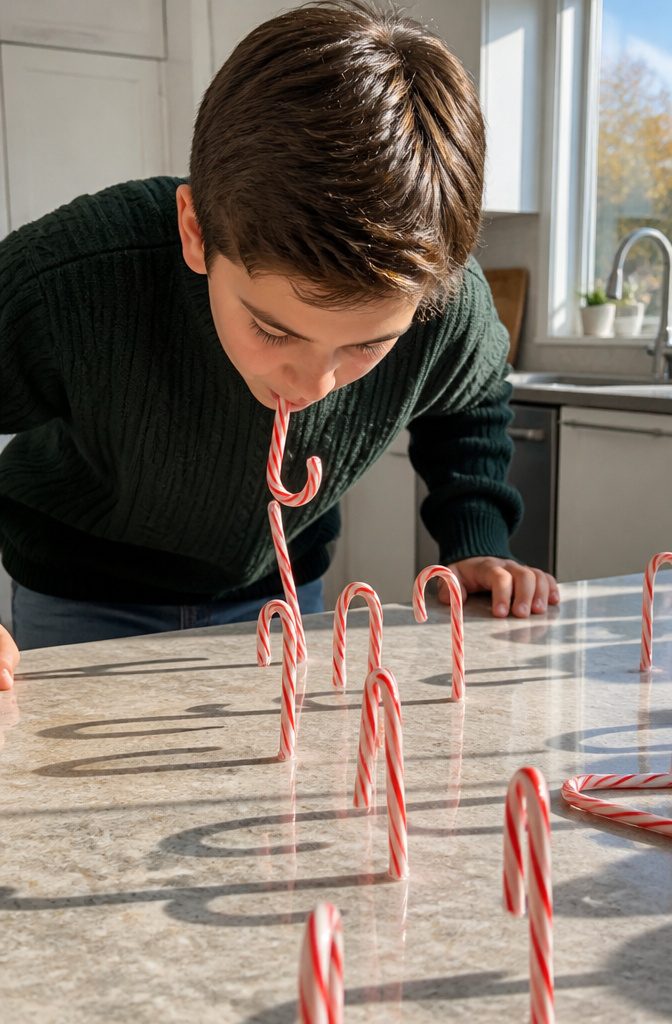
Candy canes slide easiest across a smooth, hard surface like a kitchen table or countertop. Carpet fights the hook every time.
Each player tucks one candy cane into their mouth with the hook facing down. The rest of the candy canes sit on the table in a loose pile or a line.
One minute on the clock. The goal is to hook as many loose candy canes as possible onto the one in your mouth without using your hands.
The technique is all in the neck. Lower your head, slide the hook under the curve of a target candy cane, and lift slowly.
A quick jerk sends everything scattering. I have watched people try to spear them like a fork, but the hook opens outward; you need to scoop from below.
Since nobody eats the candy canes during play, the whole box stays intact for afterward. The winner keeps their hooked collection as a trophy, or the whole pile can go into a bowl by the door for guests.

Size & Packaging:Each set comes in a charming gift box, keeping 24 unique bingo cards, 7 chips, and 2 calling cards neatly organized. All pieces are sized at 5×7 inches—perfectly portable for parties, yet large enough for easy viewing. A thoughtful package that's ready to gift or store, adding convenience to your holiday prep.
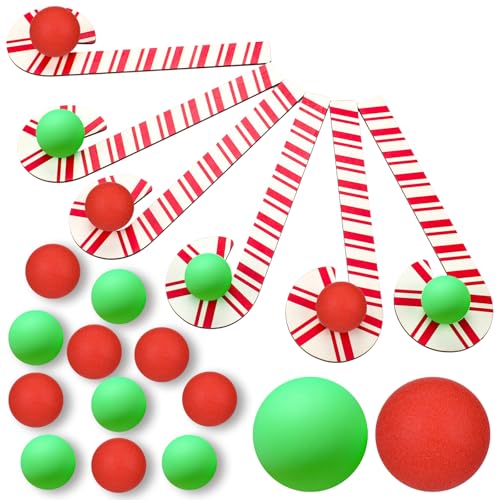
Spoon Relay Race Set: the Christmas party game package comes complete with 24 wooden candy cane spoons and 24 balls (including 12 red and 12 green), providing ample quantity for groups to enjoy and ensuring everyone is fully immersed in the excitement of the game

COMPLETE SET: Includes six 6" x 8" game boards, 50 game tokens, and a spinner board. Everything you need for hours of festive fun.
3. Mistletoe Kissing Toss
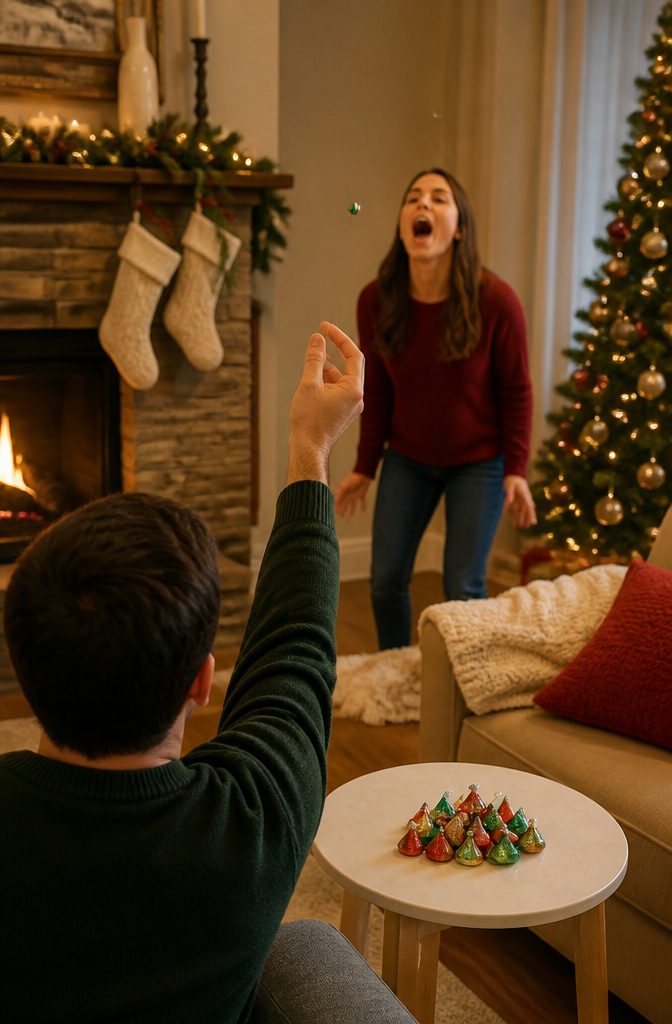
Two players per team, one tossing and one catching, with a pile of wrapped Hershey’s kisses in front of the thrower.
The tosser unwraps each piece and tries to land it in their teammate’s mouth; the team with the most catches in one minute wins. I like the one-minute limit because it keeps the pressure high without anyone getting bored.
The distance matters more than you’d expect.
Too close and the catcher has no reaction time, too far and you’re chasing foil across the rug. Six to eight feet is the workable range, though couches and coffee tables will force your hand in most living rooms.
Whether to unwrap is the main decision.
The sources split on this: some run it wrapped, some insist on unwrapping first. Unwrapping adds the fine-motor scramble and keeps the foil out of the game; wrapped speeds things up but turns it into a harder, more chaotic toss.
I lean toward unwrapping, if only because watching someone fish foil from behind the piano is not the holiday memory you’re after.
The real difficulty is the shape. A Hershey’s kiss is light, uneven, and prone to sailing left when you aimed right.
The paper flag catches air. The catcher’s jaw has to stay relaxed enough to receive but ready enough to clamp, which is a harder balance than it sounds, especially with cousins heckling from the couch.

CHRISTMAS GAMES FOR KIDS AND ADULTS - Inflatable reindeer antler ring toss game includes 2 hats with chin straps, 12 rings, 2 red noses and air pump for active holiday fun.
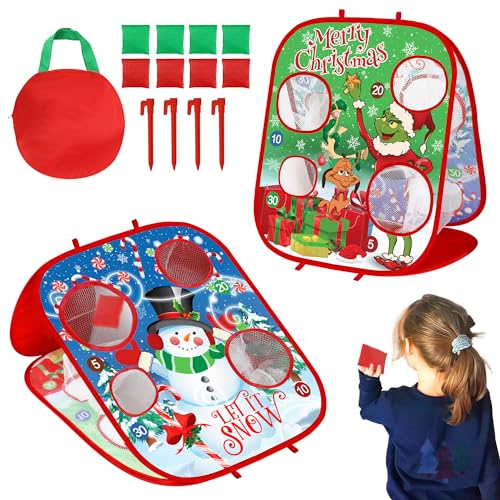
【Christmas Bean Bag Toss Game】Our christmas super value set come with 1 collapsible toss board with double sides, 8 bean bags 4 ground nails in a tote bag for your convenience. This christmas bean bag toss game board can be assembled very quickly by flicking and sticking and stored very easy more lightweight and portable.

Fun Games Set: The christmas velcro ball game set includes with 1 pack gingerbread man dart boards in 21.25 × 29.92inches, 12pcs sticky balls in 4 color and 3pcs each color, 1 sticky hooks for you to enjoy the funny game activity with large group
4. Tannenbaum Avalanche
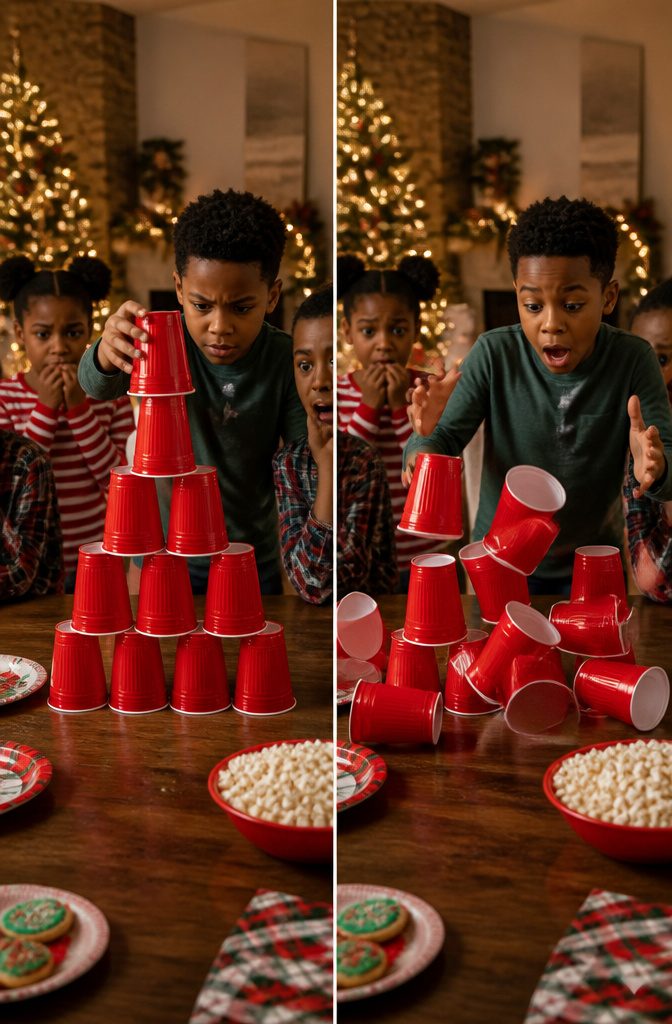
Red plastic cups from the grocery store are all you need, and the small ones work better than the large.
They are sturdier, which matters when you are building fast under a timer, and they do not collapse as easily when the stack leans. I keep a set in the Christmas decorations box now; they hold up year to year.
Each player gets a stack and one minute to build the tallest Christmas tree.
The tallest tree wins, measured either with a ruler or by counting rows. Most attempts end the same way: the base wobbles, the middle rows lean, and the whole thing folds sideways before the top cup goes on.
What the finished tree should look like is a neat triangle, widest at the bottom and tapering to a single cup at the peak.
What it usually does is a lopsided tower that pancakes at forty-five seconds because someone tried to go too high too fast. Speed matters, but a stable base buys you more height than rushing does.

32 Pcs Christmas Games for Party Set: package includes 24 plastic cups, each 12 red and 12 green, plus 8 game balls (4 red and 4 green); The coordinated red and green cups...
5. Bell Stack Party Game
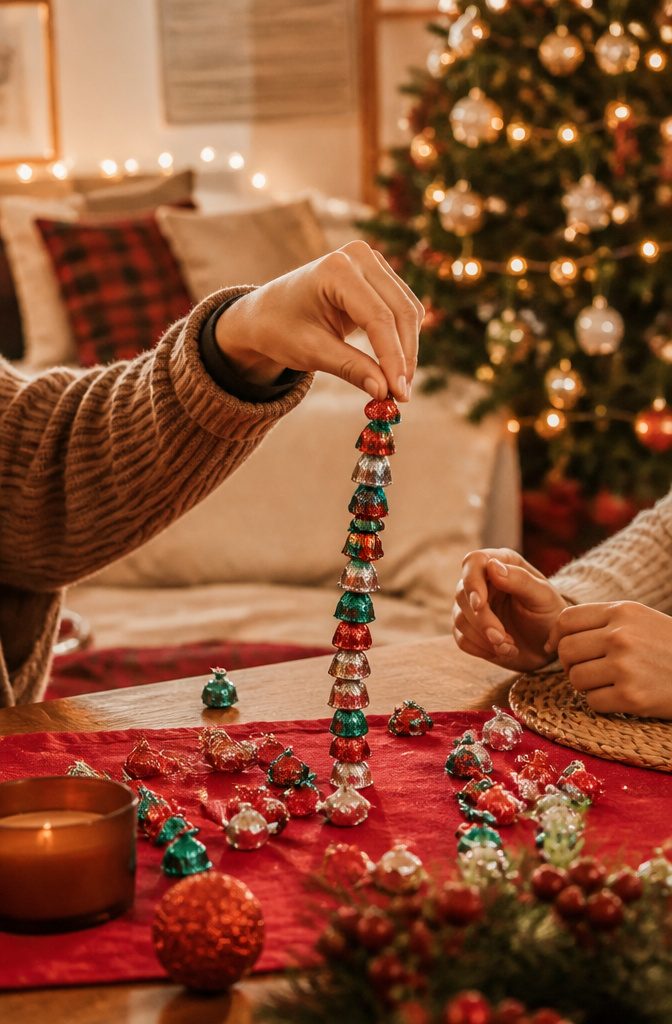
Hershey’s Kisses bells work, though the point tips make the stack a gamble from layer two onward.
Brach’s chocolate bells hold steadier; the flat base gives you something to build on, and the foil is just grippy enough that a careful hand can balance four or five before physics wins.
The instability factor is real and it is immediate. The minute timer sounds generous until you are hovering a third bell over a tower that already sways.
I have watched a cousin hit seven bells on Christmas Eve, hands shaking, only to breathe wrong and send the whole column into the carpet.
Most people land at three, maybe four if the room stays quiet. That seven-bell record still stands in my family, and it has not been close to broken in three years of trying.
The bag feeds a crowd and cleans up after itself.
Whatever does not end up in the tower goes back to the bowl, or into pockets, or into the RACK bags my aunt hands out later that night. No cups to save, no props to store.

All-Ages Holiday Ring Toss Game:Turn Christmas parties and family gatherings into nonstop laughter. This wooden reindeer toss game suits kids, adults, and grandparents alike — everyone can join in and make warm festive memories together.
MINI DESK & TABLE GAMES: This mini arcade & table games for adults also can be used for coffee table games for kids 8-12 with family. And this tabletop games also is a mini desk games for office for adults desktop games for work.

Package Included: The Christmas gift exchange game cards set includes 1 pcs instruction card and 60 pcs gift exchange cards in different designs. The ample quantity is sufficient to meet your Christmas party game needs. The instruction card clearly explains the rules, so you don't need to worry about not knowing how to play, allowing you to easily and enjoyably enjoy the game
6. Oh, Christmas Tree
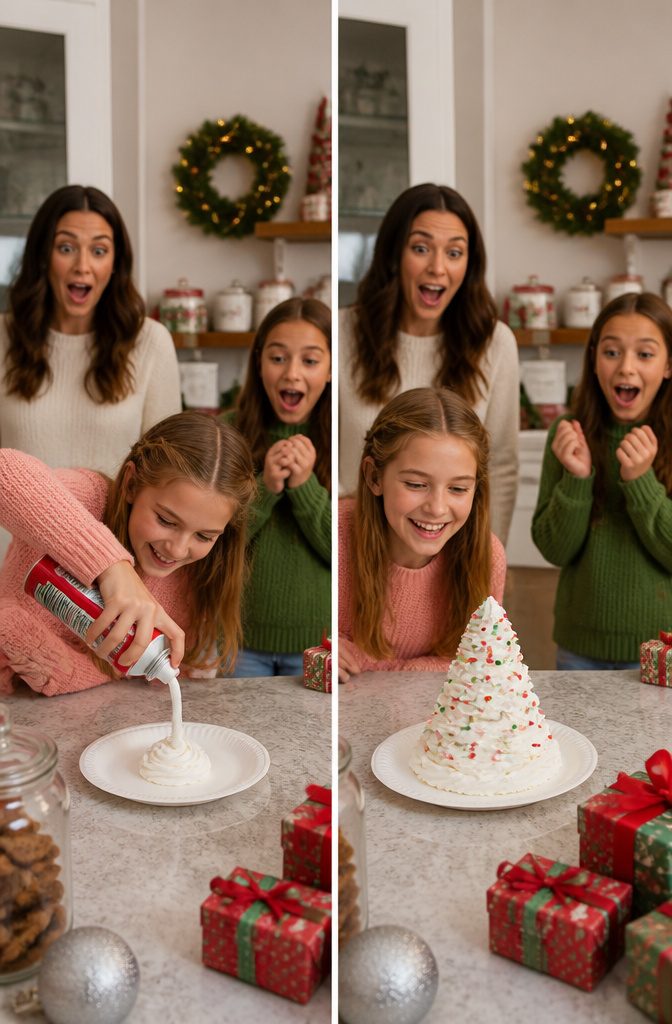
Reddi-Wip and paper plates are the whole supply list for a game that sounds sillier than it is tactical. Each player gets one can and one plate, and on a countdown you start spraying upward into a tree shape.
The technique is to build a base first and stack in tight coils, because whipped cream holds its own weight for only so long before gravity wins.
The melting timeline is the real opponent. At room temperature you have maybe a minute before the structure slumps, which is why the timer is set to exactly sixty seconds.
Paper plates matter more than you’d think: a ceramic plate keeps cold longer and firms the cream from below, which sounds helpful but actually gives an unfair advantage to whoever drew that seat.
The paper plate stays neutral, warm, and slightly porous, so the tree lives or dies by your spraying hand alone.
Tallest tree wins, though some households judge on looks instead.
Either way, cleanup is the plate itself and maybe the table edge. The leftovers do not keep; you eat them or you don’t.

GINGERBREAD BINGO SET:package includes 24 unique Christmas bingo game player cards,385 marking chips(11sheets),1 caller chips.Christmas bingo for kids is perfect for large group to playing,great family and mommy time game with your kiddo/friends

Package: You will receive 1 double-sided printed sign and 30 stickers. If you are looking for a fun and affordable Christmas party game, this fun name game will never disappoint you.

Dimensions: Each game card measures 5x7 inches, and a set of 30 cards is provided.
7. Holiday Spoons
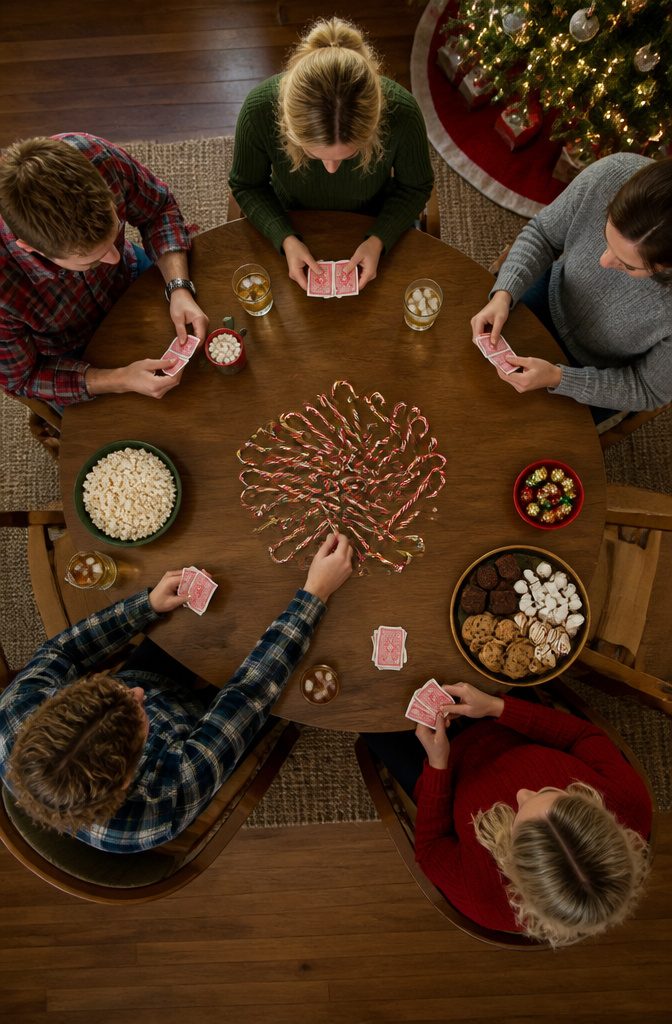
A deck of playing cards and a pile of candy canes are all you need for this one.
Set out one less candy cane than you have players, right in the middle of the table. Everyone draws cards in turn, passing discards to the left, chasing four of a kind.
The moment you collect four matching queens or kings or sevens, you reach for a candy cane. The trick is doing it quietly.
The last player left empty-handed sits out the next round, and you pull one candy cane from the pile so the shortage stays exact. Keep going until one person is left.
The candy cane swap matters more than it sounds. With regular spoons, the clatter gives away the race the instant metal hits wood.
Candy canes land soft, so a player can grab one while the rest of the table is still studying their hand. That shifts the game from reflexes to watching your neighbor’s eyes.
The cards themselves stay standard; no jokers required, no custom deck to track down. Three players is the floor, though the chaos scales up fine to a crowded dinner table.

【14 Pcs Christmas Party Game Set】Includes 4 inflatable candy canes, 8 Christmas-themed target cards and 2 adjustable waist belts. The complete set supports multiple players and is ideal for Christmas parties, family gatherings, office celebrations and holiday game nights.

Fun Filled Christmas Game Set: bring the festive cheer to your tail Christmas party games, Christmas indoor activities and office activities with this Christmas tail game set; This Christmas games for adults set includes 4 inflatable candy cane design, 2 adjustable straps and 6 Christmas cardstock rings accessories, making Christmas tail games not just fun but also versatile
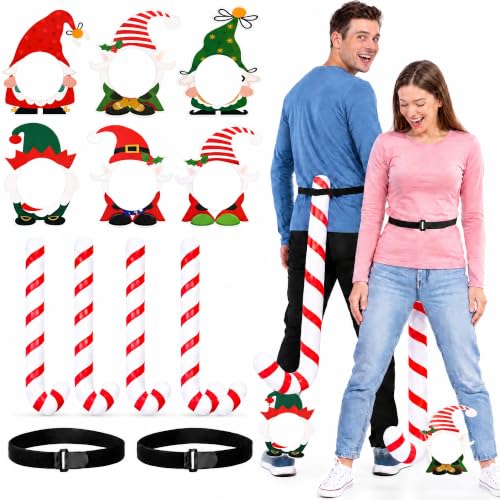
Fun Filled Christmas Game Set: bring the festive cheer to your winter Christmas party games, Christmas indoor activities and office activities with this vintage Christmas game set; This set includes 4 inflatable candy cane design tails, 2 adjustable straps and 6 cardstock rings accessories, making it not just fun but also versatile
8. Holiday Charades

Holiday charades works best when the word list is built in layers. I sort mine into four piles: Christmas songs and carols, movies and specials, seasonal activities, and holiday foods.
A few from each category keeps the room from stalling out on one kind of clue, and mixing modern references with the traditional ones means the teenagers and the grandparents both have moments where they light up.
The rule that saves every holiday gathering is this: no signing letters, no talking, no sounds at all.
Not even a hum. One mumbled "sounds like" turns the game into an argument about whether the hum counted as a hint, and that energy is impossible to recover.
Set a timer on a phone, two minutes per turn, and play to a point total rather than round by round. That way a slow early round does not doom anyone.
For mixed-age groups, two-person teams work better than going solo. An adult paired with a child can whisper the harder words while the kid handles the acting, so nobody sits out for being too young to read the slips.

【Christmas Games】 Comes with a storage bag contains a folded up cornhole board + 8 bean bags + 8 sticky balls + 4 ground stakes. It’s Christmas theme designed with 3 games, one side for Christmas bean bag toss game, one side is Christmas dart board for kids and the third side is Christmas holiday tic tac toe game

2-in-1 Christmas Party Toss Games Set: This set features a double-sided foldable target—Nutcracker-themed bean bag toss on one side, Santa Claus sticky ball dart on the other. With 8 bean bags and 8 sticky balls, it’s the ultimate Christmas party games for endless festive fun.

Spread The Cheer: We designed Last Christmas to bring tons of joy! Whether at the office holiday party, or spending time with friends & family, this card game is guaranteed to bring up fond memories while creating new ones. Have the jolliest time playing or gift it to someone else!
9. Santa-Style Limbo
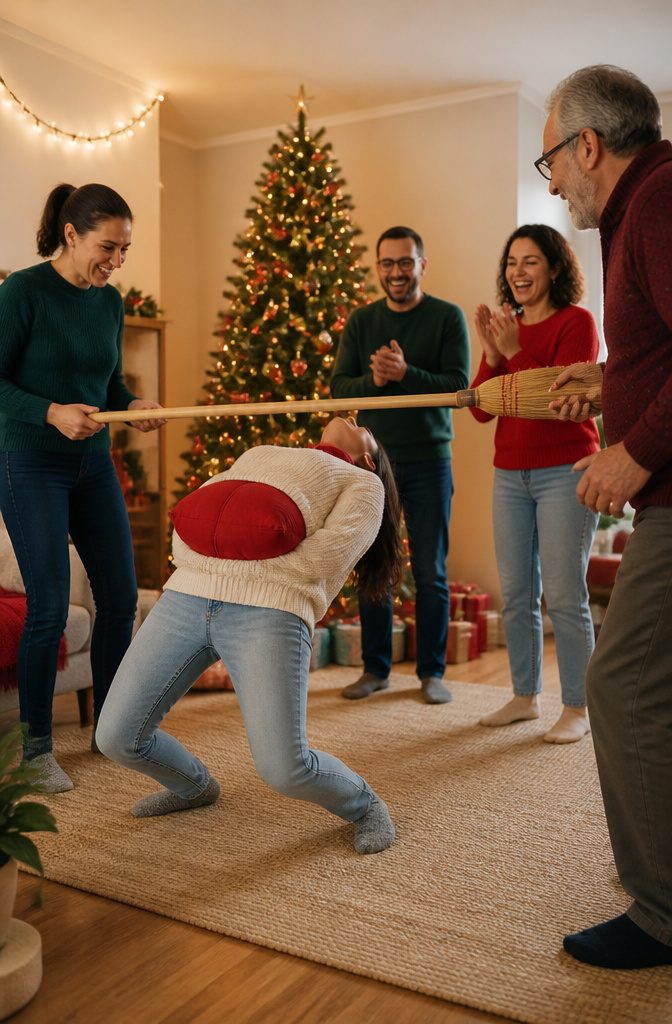
A standard bed pillow under your shirt is the right size for this: thick enough to throw off your center of gravity, not so bulky that you can’t bend backward at all.
Two people hold a broomstick or a strand of Christmas lights at a starting height most adults can clear on the first try, then lower it a few inches each round.
The pillow forces your spine into a deeper arch than ordinary limbo, because your hips sit forward and your shoulders have to travel farther back to compensate.
Someone who folds neatly in half on a normal turn will find themselves flailing for balance once the belly is in play.
The stick wins if everyone collapses; the last person still clearing it, however messily, takes the round. Keep holiday music running through the lowering, and the failed attempts become half the point.
10. Christmas Song Pictionary

Christmas Song Pictionary works best when the playlist mixes obvious crowd-pleasers with a few genuine stumpers.
"Jingle Bell Rock" and "All I Want for Christmas Is You" get guessed in under thirty seconds; the real fun starts when someone has to draw "The Coventry Carol" or "In the Bleak Midwinter."
Stick to song titles, not lyrics, unless you want every round to devolve into stick figures shouting "FIVE GOLD RINGS" at each other. Titles give the drawer something concrete to illustrate: a shepherd, a silent night, a little drummer.
Lyrics force the guessers to reverse-engineer which line you heard once in a pharmacy. If your group knows music well, toss in one or two instrumental classics like "Carol of the Bells" and watch the room go quiet.
Splitting into teams keeps the energy from collapsing when one person cannot draw a pear tree to save their life. A two-minute timer works; going longer just lets people stall.


Complete Christmas Gift Exchange Game Set: our game set package includes 1 game instruction card and 60 gift exchange cards with various Christmas element designs, clearly explains the rules of the game, facilitating a smooth and fun gaming time, ensuring that you are not left out during the fun and excitement of the gift exchange

Spice Up Gift Swaps – Enjoy 4 different ways to make exchanging gifts fun & easy, including a version played with dice for large groups. Play with family & friends & as an office holiday party game
11. Christmas Bingo
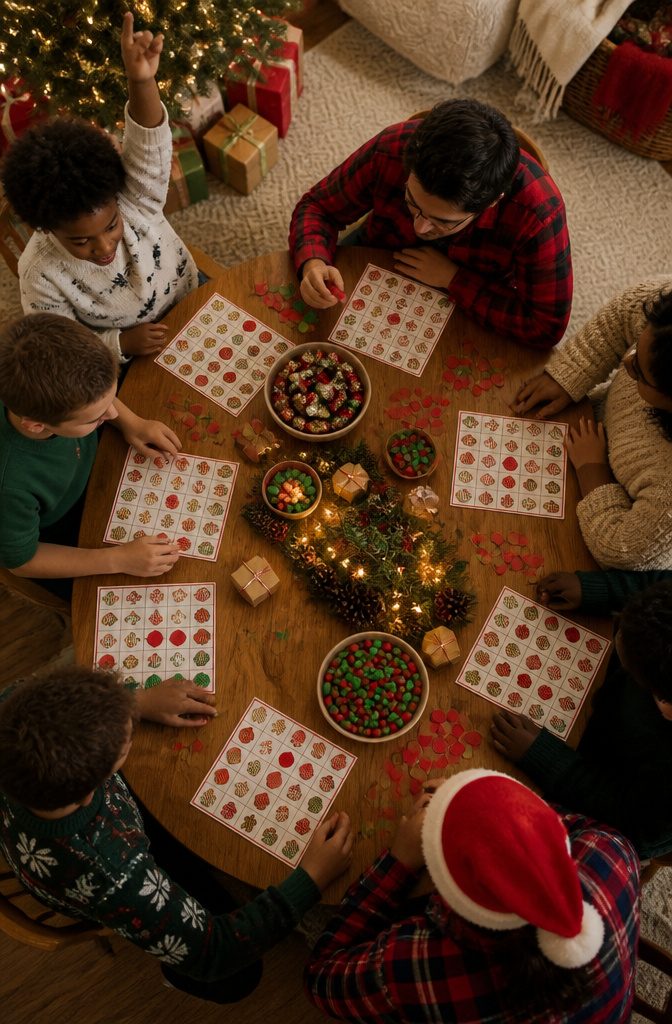
Christmas Bingo survives every holiday gathering because it asks nothing of anyone except staying awake. I make the cards at my kitchen table the night before: a five-by-five grid, holiday symbols in the squares instead of numbers.
Candy canes, snowmen, wrapped presents, reindeer, ornaments. For the younger children at my cousin’s house last year, I printed picture cards with the image alone.
For the adults and older kids, the same symbols paired with words. No one needed separate games.
The squares fill with whatever small candy is already in the pantry.
Hershey’s Kisses work; so do red and green M&Ms. The caller pulls from a matching set of cards and announces the symbol, and the room goes quiet in that competitive way that means people are actually paying attention.
When Santa comes up, whoever called it throws in a "ho ho ho" because the sources all mention this and once you start, the group insists on it.
What sells this game is the low bar. Half my family does not want to stand, move, perform, or remember rules after a heavy meal.
Bingo lets them sit, mark a square, eat the marker afterward. Up to forty people can play if you print enough cards, which covers every gathering I have been part of.
The version I found online even works over Zoom for the relatives who could not fly in, though I have not tested that part myself.
12. Christmas Scavenger Hunt

A Christmas scavenger hunt works across mixed ages when the list itself does the balancing.
Pair one adult with one kid per team, the way you would for charades, so the grown-up can read tougher clues while the younger one spots what is actually in the room.
Items already on display, a wreath or a Christmas candle or a Santa figurine, keep the prep to hiding spots rather than shopping.
The hiding spots matter more than the list. A candy cane slid behind a couch cushion is fair; one tucked inside a vase no one has opened since last December is not.
I always forget to count the items before I hand out the lists, which means someone searches for a fifth candy cane that never existed and the whole game stalls while I backtrack.
Divide into two or three teams if the group runs large. Older kids helping younger ones keeps the pace even, and a small goodie bag for the first team finished gives the adults a reason to hustle too.
The hunt moves indoors or out depending on your weather, though the holiday display items are usually inside where the tree is.
13. White Elephant Gift Exchange
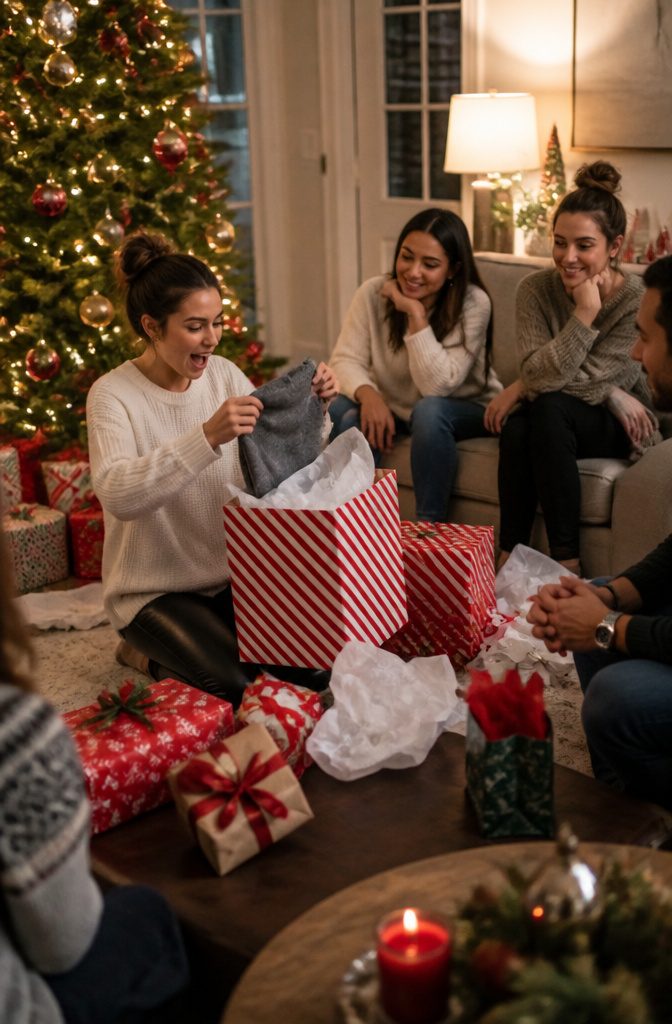
Everyone brings one wrapped gift, and the group draws numbers to set the order. The first player picks a gift and opens it.
Each person after that can either steal an already-opened gift or pick a new one from the pile, and an unwrapped gift can be stolen up to three times before it stays put.
The first player gets one final steal at the end, which keeps the opening spot from being a total dud.
A price limit keeps the game honest. Most groups land somewhere in the $15–$25 range, enough that people bring something genuinely worth wanting but not so much that stealing feels cutthroat.
The game shifts when everyone knows each other well. Inside jokes surface, rivalries flare over the one decent bottle of wine, and the worst gifts become the most hotly contested.
The classic version asks for useless or weird items you already own, but in practice most family groups agree on buying new. The choice between the two styles is worth settling before anyone wraps a thing.
14. Family Feud Christmas Edition
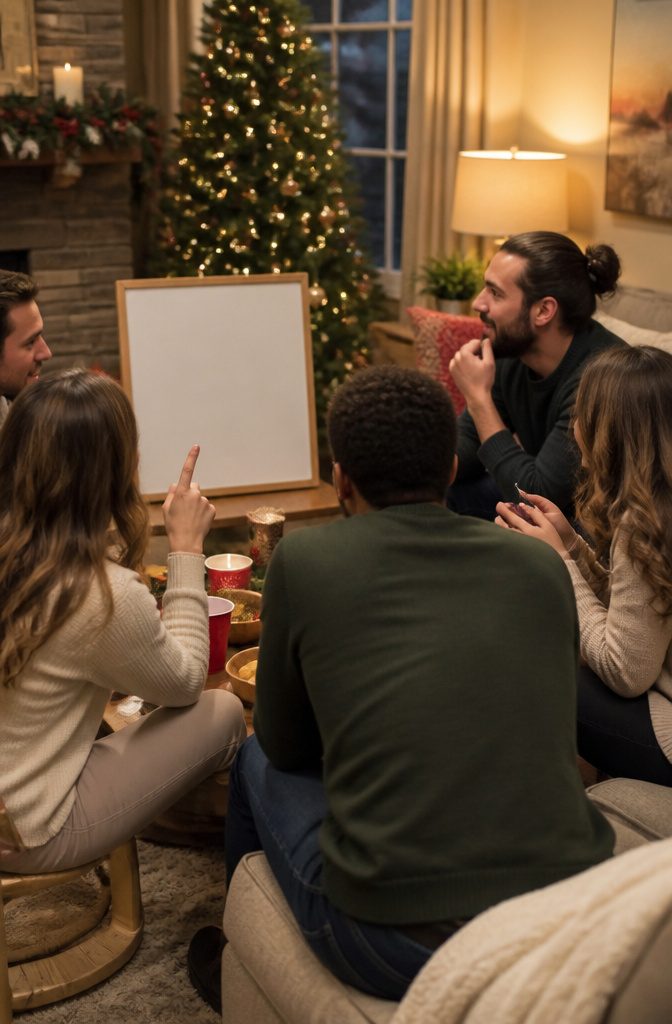
The questions are the part that trips people up, so I handle them a few days ahead.
I text friends and neighbors who won’t be at the party and ask for their top answers to prompts like "Name something people do the day after Christmas" or "Name a classic Christmas movie villain."
Their responses become the ranked list, with the most common answer worth 20 points, the next 15, and so on down. The top answer matters more than the others, which keeps the stakes high even when both teams know the category cold.
I score it a little differently from the TV version. Each team gets one collective guess in rotation rather than individual family members stepping up, which moves faster and spares the shy relatives.
If a team names something not on the list, the other side can steal the round with a single correct answer.
Odd-sized teams actually play better here. With five versus four, or six versus seven, someone is always left to watch the board and shout when their side misses an obvious one.
That spectator energy keeps the room loud and prevents the lulls that kill momentum in evenly matched groups.
15. Christmas Trivia
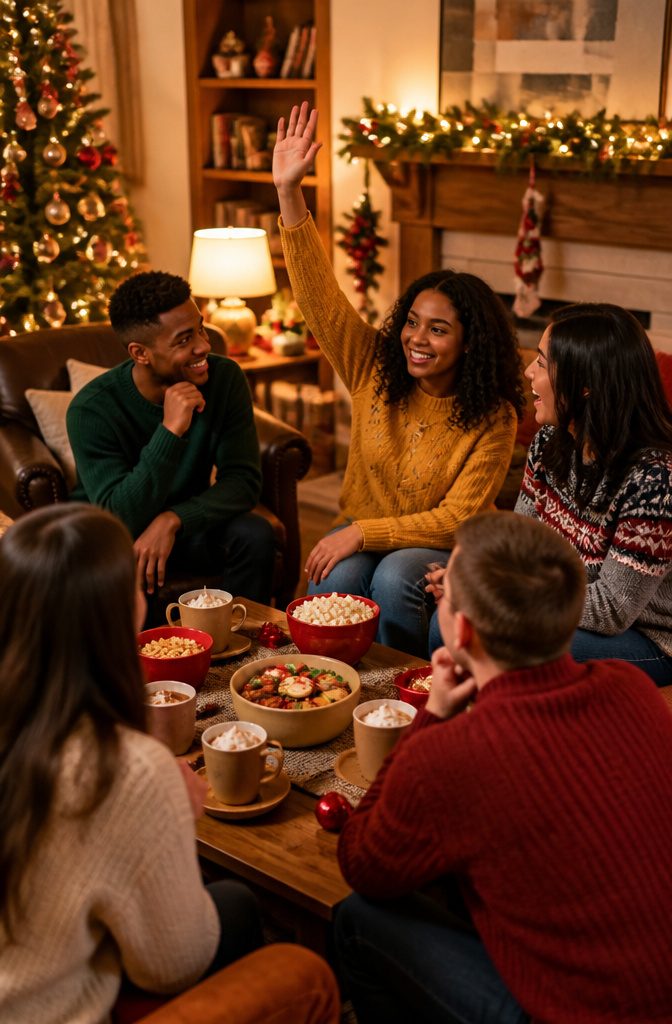
Christmas trivia works best in teams of four to six, which lets the quiet cousin who memorized every line of Elf balance out the uncle who still thinks Bing Crosby was the third Wise Man.
I aim for a difficulty spread that keeps both of them in the room: about a third easy enough for the kids to shout out, a third that pulls from pop culture and song lyrics, and a third that drifts into history or geography and separates the generations.
The categories that split the room widest are holiday movies (younger players) and mid-century carol history (older ones), so I always include both.
The tiebreaker I keep ready is the same every year: "What popular Christmas song was actually written for Thanksgiving?"
The answer is "Jingle Bells," and someone always argues. That argument is the real prize.
16. Guess Who Christmas Game

Bend the sticky note so it sticks to itself before pressing it onto a player’s forehead.
The backing paper folds into a little bridge that sits against the skin, and the note stays put through half an hour of yes-no questions without the gum pulling hair.
The game works best when the person who wrote the names sits out. One adult, or whoever is least likely to play, fills a pile of notes with Christmas characters: snowman, Rudolph, Santa, elf, the usuals.
Each player draws a note without looking and sticks it on. Then the room takes turns feeding clues, but only through questions that can be answered yes or no.
Rapid-fire works better than meandering guesses.
Give each player one minute to rattle through as many narrow questions as they can: Am I an animal? Do I fly?
Am I from a movie? The timer keeps the energy up and stops one person from stalling out the room.
Characters that are too obvious (Santa, maybe the Grinch) get guessed in two questions and leave that player bored on the sidelines.
Characters that are too obscure (the ghost of Jacob Marley, the elf from that one 1974 special nobody rewatches) stall the game entirely and frustrate whoever is stuck wearing the name.
The sweet spot is a figure most of the room can picture but not everyone can place in three clues: Rudolph, Frosty, the Heat Miser, the little drummer boy.
Names that need a song or a scene to jog the memory, but not a full Wikipedia entry.
17. Snowman Stack
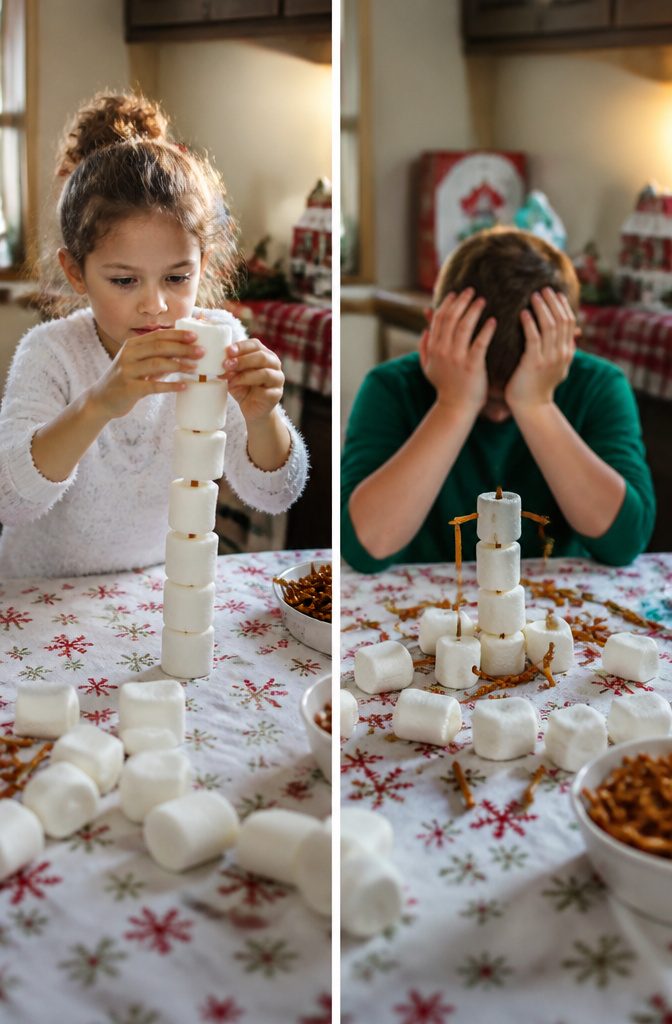
Large marshmallows work better than minis for Snowman Stack, since the smaller ones roll and slide until the whole thing leans like a drunk uncle at midnight.
I use pretzel sticks for arms, broken to different lengths so kids can argue about which snowman is waving; chocolate chips pressed in flat-side-out do fine for eyes and buttons, though a few always get eaten before they make it to the face.
The collapse always happens at the second tier.
Three marshmallows on the base looks stable enough, but that second layer sits on rounded tops with almost no flat contact. Someone always tries a fourth tier, and the wobble starts there every time.
Toothpicks help if your crowd is old enough, though I stopped bothering; the falling over is half the entertainment, and the rules at my house say the messiest rebuild wins.
18. Candy Cane Hunt

A candy cane hunt works the same muscle memory as an Easter egg search, but the slim shape and striped color make hiding spots more forgiving.
For toddlers, tuck them at ankle height behind couch legs and along baseboards where the curve catches light. Older kids need real camouflage: inside the tree, tucked behind picture frames, or balanced on curtain rods.
In our house, about fifteen candy canes covers two thousand square feet without creating traffic jams or double-finds. Fewer than ten empties out too fast; more than twenty and the last few stay hidden until Valentine’s Day.
The found candy canes can go straight into pockets, or you can assign different point values by size or color to stretch the game longer.
The source that recommends this adds a wrinkle I like: whoever collects the most points gets first pick of an alternative prize, while the actual candy canes go into a communal bowl for anyone to grab later.
That keeps sugar intake negotiable and still gives competitive kids something to chase.
19. Christmas Emoji Game

Christmas movies translate to emoji with surprising inconsistency. Home Alone works brilliantly: the house emoji plus the boy emoji plus the palm-to-face emoji lands instantly, even for the kids who have not seen it.
Elf holds up almost as well with the elf face, the spaghetti bowl, and the maple leaf.
But I stopped trying to make It’s a Wonderful Life happen after three different parties. The angel emoji reads as generic to anyone under forty, and the building-with-wings thing nobody recognizes.
I split players into teams of three or four and project the emoji strings on a laptop screen everyone can see. Thirty seconds per round keeps momentum up; anything longer and someone starts checking their phone.
The scoring runs on the honor system, which has never been an issue in my living room but might need tighter rules if your relatives are more competitive than mine.
The real surprise hit was Klaus, the Netflix Santa origin story.
The mail truck, the island, and the wrapped gift give just enough information that someone usually nails it by the second clue, and the guesser feels smart for getting there.
That is the sweet spot you are after, not the movie everyone knows but the movie someone remembers well enough to feel clever guessing.
20. Jingle Bell Toss

Jingle Bell Toss works best with three container sizes staggered across the room.
A wide mixing bowl at five feet gives the youngest players something to hit, a medium saucepan at eight feet raises the stakes for school-age kids, and a narrow drinking glass at ten feet is where the adults lose their dignity.
Metal jingle bells bounce differently than plastic balls or beanbags, which is the whole point and the whole problem. They skitter, they rattle, they roll off the rim in ways that make a clean landing feel earned rather than random.
Heavier bells sit where they land; lighter ones jump like crickets. I have had better luck with the one-inch size, heavy enough to settle but small enough to fit a glass opening.
If the bells keep bouncing out, set the containers on a towel or a length of felt. The fabric deadens the ricochet without changing the game into something else entirely.
Frequently Asked Questions
What are some fun Christmas games to play with family?
The article covers twenty options, from physical challenges like the Gingerbread Shuffle and Candy Cane Slide to creative contests like Oh, Christmas Tree with whipped cream and paper plates.
Team games include Mistletoe Kissing Toss and Family Feud Christmas Edition, while calmer options include Christmas Bingo and Holiday Charades. Most use common household items or inexpensive holiday candy.
How can I include kids in Christmas games?
Pair one adult with one child for games like Christmas Charades or the Christmas Scavenger Hunt, so grown-ups can read tougher clues while kids spot items or act things out.
Christmas Bingo adapts easily with picture-only cards for younger players and word cards for older ones.
The article also notes that odd-sized teams in Family Feud actually play better, since someone is always left watching the board and shouting when their side misses an obvious answer.
What supplies do I need for Christmas games?
Most games in the article need basic holiday items or things already in the house: small gingerbread cookies for the Gingerbread Shuffle, candy canes for the slide and spoon games, red plastic cups for Tannenbaum Avalanche, Reddi-Wip and paper plates for Oh, Christmas Tree, and a deck of playing cards for Holiday Spoons.
Some, like Christmas Charades and Christmas Trivia, need only paper and a timer.
What are some easy Christmas games?
Christmas Bingo and Holiday Charades are the simplest to set up. Bingo needs only printed cards, small candy markers, and a caller pulling symbols from a matching set.
Charades requires pre-written word lists sorted into categories like carols, movies, and holiday foods, plus a two-minute timer. Neither asks players to stand, move quickly, or remember complex rules after a heavy meal.
How do I organize a Christmas scavenger hunt?
Prepare a list of Christmas items already on display, like a wreath, candle, or Santa figurine, so prep stays limited to hiding spots rather than shopping.
Pair adults with kids per team, and keep hiding spots fair: behind a couch cushion works, inside a vase nobody has opened since last December does not.
Count your items before handing out the lists, since the article admits forgetting this step and sending players hunting for candy canes that never existed.