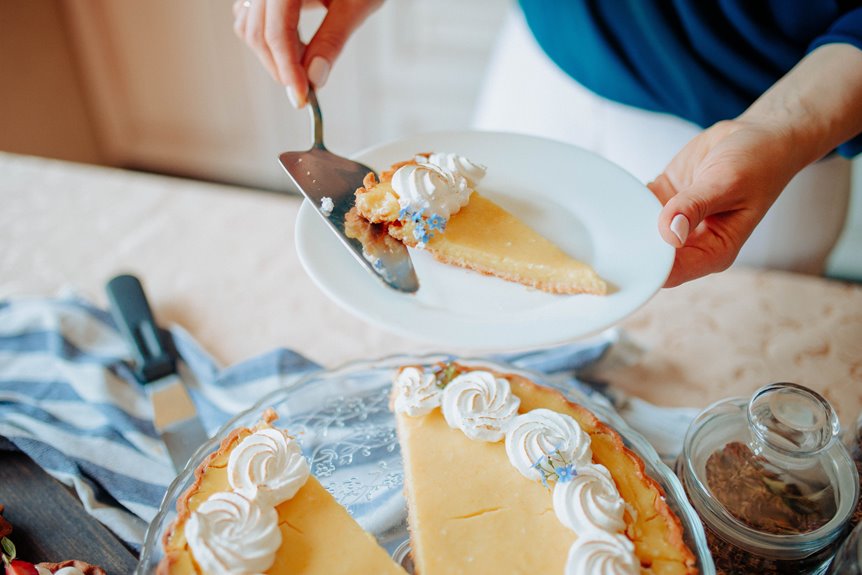
You’ll find a quarter sheet cake nestled in a 9 × 13 inch pan, the aluminum workhorse that has anchored American celebrations since the 1950s, though some bakers favor 8 × 12 or 9 × 12 variations depending on their oven’s temperament and serving goals. This single-layer rectangle, typically one inch tall, yields twenty to twenty-four generous portions when sliced into classic 2 × 2 inch squares, its proportions striking that sweet spot between abundance and manageability.
The dimensions emerged from decades of home baking culture colliding with commercial practicality, fitting domestic ovens while nesting neatly alongside half and full sheets in professional kitchens. Understanding these measurements provides precise control over portioning, height, and the technical decisions that distinguish good bakes from excellent ones.
What Exactly Counts as a 1/4 Sheet Cake?
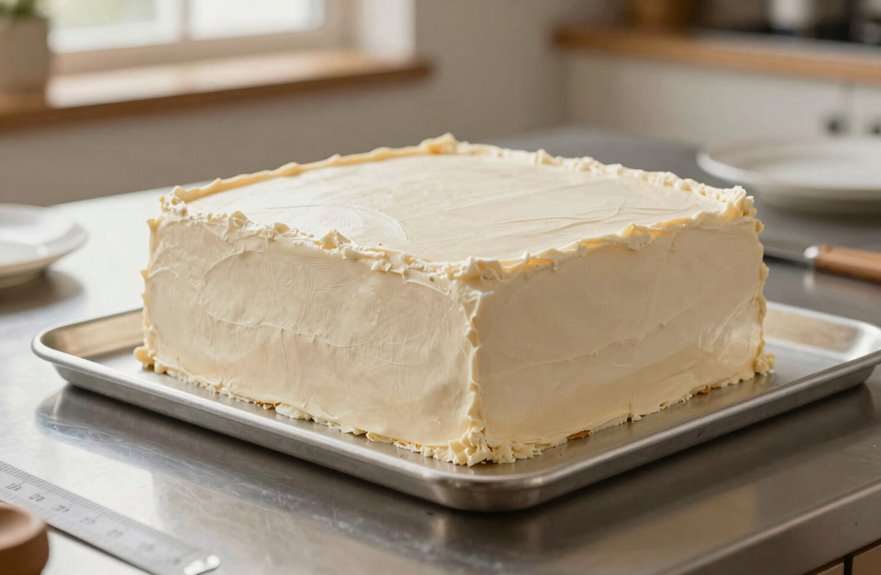
Where exactly does the quarter sheet cake begin, and what distinguishes it from its larger sheet cake cousins? You’re entering a world where precision matters. The 9 × 13 inch rectangle is the standard size for this celebration staple. This sheet cake, born from commercial bakery traditions, represents one-quarter of a full sheet pan, not some mysterious fraction of round cakes.
You’ll find it measuring roughly 9 × 13 inches, though some variations include 8 × 12 or 9 × 12 sizes in professional kitchens. It’s your single-layer option, standing about one inch tall and baking perfectly in standard home ovens. It serves as the practical choice between intimate gatherings and larger events, typically yielding twenty to twenty-four servings when sliced into neat 2 × 2 inch portions.
Bakeries interpret this standard differently across regions and establishments.

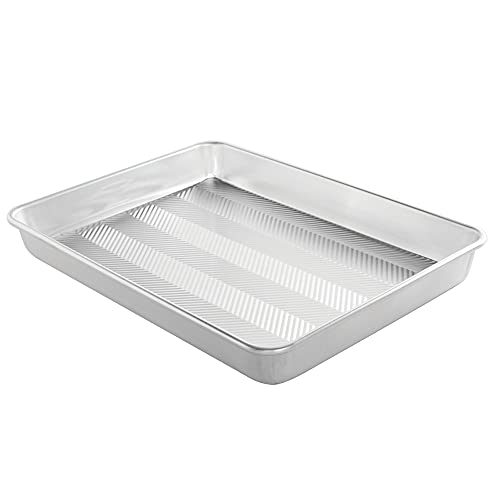
9 x 13 inch rectangular cake pan; made from aluminized steel; a mix of steel for strength and durability and aluminum for superior heat conductivity; oven safe to 450°F

Naturals bakeware is made of pure aluminum which will never rust for a lifetime of durability. Foods bake and brown evenly due to aluminum’s superior heat conductivity.

Bake with confidence with Wilton Aluminum Pans. Designed in the USA and made from natural anodized aluminum, this 9x13 Inch rectangular sheet cake pan delivers durability and rust-resistance, ensuring a consistent result every time.
How Many People Does a 1/4 Sheet Cake Actually Feed?

How precisely can you plan your celebration when you’re staring at that rectangular canvas of buttercream and crumb? Your 1/4 sheet cake transforms from mere dessert to a practical tool for serving guests once you understand its capacity.
You’ll find your pan size, typically 9 × 13 inches (though some variations measure 8 × 12), directly dictates your servings. Standard 2 × 2 inch slices yield twenty to twenty-four portions, while heartier 2 × 3 inch cuts accommodate fifteen to twenty guests. For intimate gatherings, smaller pieces stretch your 1/4 sheet cake to nearly thirty servings.
Most birthday gatherings accommodate twenty to twenty-four guests comfortably with a 1/4 sheet cake, making it a reliable choice for medium-sized events.

Commercial & Professional baking sheet pans are essential additions to kitchens, bakeries, cafeterias, diners, restaurants, coffee shops and cafes. The ideal size sheet pan for your toaster oven.

Uncoated aluminized steel for rapid heating and even baking, made without PFAS

⚠️ CHECK THE SIZE BEFORE BUYING! IMAGE 3 ⚠️ These rectangle cake boards measure 13.8" x 9.9", making them suitable for a quarter-sheet cake, a row of mini desserts, or one decorated round cake
How Big Should You Cut Each Slice?

Your slice dimensions act as the conductor of your cake’s ultimate performance, determining how far your 9 × 13 inch creation will stretch across the table. Whether you’re carving neat 2 × 2 inch squares for a classroom celebration, yielding those precise 20–24 portions, or expanding to generous 2 × 3 inch rectangles when the occasion demands something more substantial, your cutting strategy must align with the event’s scope and appetite. A single-layer vanilla sheet at a casual bake sale tolerates smaller cuts effectively, while a towering two-layer chocolate masterpiece at a milestone birthday calls for heftier portions that suit its structural complexity. Portion size directly affects how your dessert satisfies your guests and complements the occasion.

NO WARP DURABILITY: This nonstick 9x13 cake pan features heavy-duty construction that resists warping and heats evenly to brown beautifully and help reduce hot spots

Nonstick Quarter Sheet Pan for baking cookies, roasting vegetables, reheating leftovers; commercial grade and heavy gauge aluminized steel
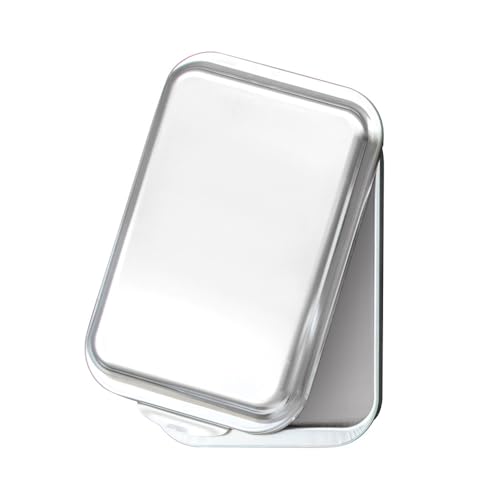
Natural aluminum commercial bakeware is made of pure aluminum which will never rust for a lifetime of durability
Slice Dimensions Matter
Why does a single slice of cake carry so much weight in your final presentation? Your serving sizes speak volumes about your craft, and mastering slice dimensions separates the enthusiastic beginner from the confident creator. When you’re working with 1/4 sheet cake sizes, typically 9 × 13 inches, though you’ll encounter 8 × 12 or 9 × 12 variations, you’re holding a canvas that demands precision. Cut 2 × 2 inch portions and you’ll yield twenty to twenty-four servings, each a neat square of promise. Stretch to 2 × 3 inches for heartier appetites and your count drops to fifteen or twenty. Shrink to 1.5 × 2 inches and suddenly you’ve stretched your creation to thirty pieces. Height and filling transform everything, making your knife-work the hidden signature of your skill.
Occasion-Based Sizing
Consider your occasion as a compass pointing toward your cutting strategy, and you’ll transform from uncertain slicer to decisive host. When you’re hosting an intimate dinner, your 9 × 13 inches sheet cake becomes a canvas for generosity, yielding fifteen to twenty substantial 2 × 3 inch portions that encourage lingering conversation. For bustling birthday parties where guests mingle rather than settle, you’ll craft twenty to twenty-four precise 2 × 2 inch squares, ensuring no one leaves empty-handed. The versatile format adapts to different presentations: taller layers, achieved through careful stacking and dam-building with buttercream, create visual abundance that stretches perceived servings without sacrificing satisfaction. You’re not merely portioning cake; you’re orchestrating experience, reading your room like a seasoned pastry chef who understands that generosity and practicality work together in measured steps.
Does Height Change How Many Servings You Get?
You might wonder whether stacking layers sky-high transforms your quarter sheet into a bottomless well of portions. The truth is that height, like a cake’s architectural ambition, doesn’t expand the map of your pan. The 9 × 13 inch territory yields its 20–24 servings (or 15–20, if you’re feeling generous with the knife) based on surface area alone. A towering two-layer construction does shift how substantial each forkful feels in your guest’s hand. Understanding this distinction means recognizing that the number of servings depends on how you cut the cake, not on how tall it stands.
Better Airflow for Crisping

Ideal for any recipe - Designed for sheet cakes, brownies, blondies, pastries, bar-type cookies, casseroles, lasagnas and roasts.

Naturals commercial bakeware is made of pure aluminum which will never rust for a lifetime of durability. Foods bake and brown evenly due to aluminum’s superior heat conductivity
Layer Height Impact
How does a taller cake affect guest satisfaction at your celebration? When you slice into your sheet cake, you’re not just cutting cake. You’re creating an experience where layer height influences the entire affair, transforming portions into shared moments of indulgence.
Consider how your choices affect the gathering:
| Your Layer Height | The Resulting Experience |
|---|---|
| 2 inches total | Lighter, finger-food elegance |
| 4 inches standard | Balanced forkfuls of comfort |
| 6 inches towering | Dramatic, Instagram-worthy abundance |
Taller doesn’t automatically mean more servings. You’re trading vertical presence for horizontal division. The same 9 × 13 inch surface yields different visual impacts depending on how you stack those layers, creating community through each slice.
Serving Size Adjustment
Height introduces a paradox into your portioning calculations, where the eye perceives abundance while the mathematics remain grounded in surface area. Whether that towering creation changes your serving size depends on one factor: your 9 × 13 inch footprint remains your anchor for planning.
- Two-layer heights create visual drama without expanding your area-based calculations
- Children’s parties let you stretch portions to 30 servings through 1.5 × 2 inch precision
- Adult gatherings demand 2 × 3 inch portions, landing you 15-20 servings
- Multi-layer constructions allow guests to feel satisfied with less due to perceived volume
- Your actual yield lives in the slice dimensions you choose, not the vertical rise
Your serving size depends entirely on the slice dimensions you select, not on how tall the cake rises.
Should You Bake Single or Double Layer?
Whether you’re feeding a modest gathering or aiming to impress with architectural flair, the choice between a single-layer simplicity and a towering double-tier creation transforms your quarter sheet from humble canvas to statement piece. You’ll find the standard 9 × 13 inch single layer serves your circle beautifully, yielding 20–24 generous portions when sliced into classic 2 × 2 inch squares, perfect for those cozy celebrations.
If you’re craving that bakery-window wow factor, you’ll stack two quarter sheets with buttercream or fruit filling between, effectively doubling your dessert’s presence without expanding its footprint. This approach elevates your sheet cake from everyday treat to centerpiece, though you’ll want to adjust your serving count accordingly. Your decision depends on whether you prioritize abundance or altitude, rustic charm or refined elegance.

Naturals bakeware is made of pure aluminum for superior heat conductivity and produces consistently evenly browned baked goods every time.
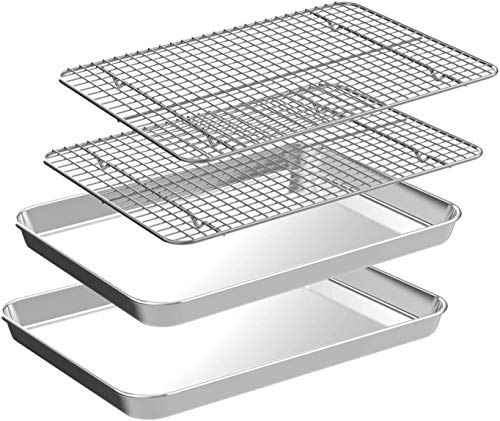
PERFECT AND COMPLETE SET: CEKEE quarter baking sheet with rack sets are 4 PIECES , which includes 2 baking pans: 12.59 × 9.84×1.18 Inch, 2 Wire Racks: 11.57×8.97 Inch. This quarter sheet pan with cooling rack is perfect combo, which can help you for baking or cooking favorite food

STAINLESS STEEL & HEALTHY: The baking pan is made of food-grade pure stainless steel, No worries about any coating chipping or harmful chemicals releasing into your food, Healthier choice for your daily kitchen use, Great replacement to other coating or metal pans
How Does a 1/4 Sheet Compare to Half and Full Sheets?
Exactly where does your modest 9 × 13 inch quarter sheet stand when you compare it to its larger siblings, the half and full sheets that dominate bakery cases and catering spreads alike?
Consider this tiered world of rectangular confections. Your quarter sheet occupies the intimate corner of home kitchens and small gatherings, a compact canvas yielding roughly twenty generous portions. The half sheet doubles your acreage to 13 × 18 inches, inviting you into potluck territory. The full sheet, measuring 18 × 26 inches, commands the room like a banquet table centerpiece.
- Your quarter sheet serves 20–24 guests with modest 2×2 inch slices
- The half sheet sprawls across roughly triple your quarter sheet’s territory
- Full sheets exceed the capacity of most home ovens and require commercial-grade equipment
- Quarter sheet dimensions shift slightly by manufacturer
- Height stays consistent near one inch across all three standards

FARBERWARE STRONG: This baking pan's heavy-duty construction resists warping and heats evenly to brown beautifully and help reduce hot spots

Ideal for any recipe - Designed for sheet cakes, brownies, blondies, pastries, bar-type cookies, casseroles, lasagnas and roasts.

Commercial grade, heavy gauge aluminized steel provides fast, even heat distribution and lasting durability and stability
What Events Work Best for a 1/4 Sheet Cake?
Where exactly does your 9 × 13 inch cake shine brightest as you stand before the bakery case weighing your options against the guest list. Your quarter sheet cake works best in intimate gatherings where connection, not excess, defines the celebration.
| Event Type | Why It Fits |
|---|---|
| Small birthday parties | You share cake among 15–20 closest friends, no leftovers haunting your fridge. |
| Office celebrations | Colleagues gather, each claiming a 2 × 2 inch square of belonging. |
| Baby showers | The serving size complements finger sandwiches and collective joy. |
| Family reunions | When dessert joins a potluck spread, event suitability means moderation, not dominance. |
With 20–24 modest slices, you’re hosting, not hoarding. This cake size builds community through measured generosity, one perfect rectangle at a time.

STURDY AND DURABLE - Don’t worry about your cake cracking on this quality strong quarter sheet cake boards

【Perfect Fit for Quarter Sheet Cakes】- Custom-sized at 13.75 x 9.75 inches, these rectangle cake boards are specifically designed to support standard 1/4 sheet cakes (typically baked in 9x13 pans). The precise dimensions ensure a professional fit without excess margins, making them the ideal choice for home bakers and small bakeries looking for a clean, tailored presentation.
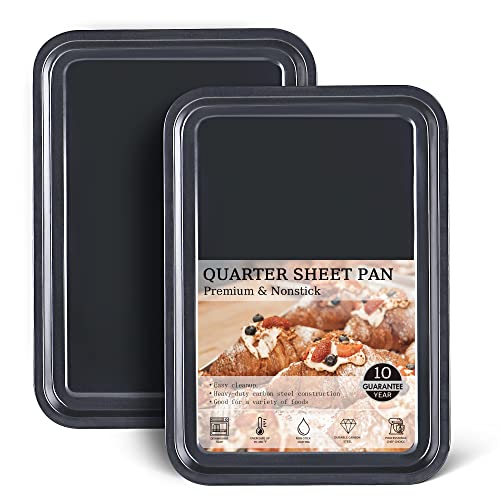
WIDEN DESIGN - HONGBAKE rimmed cookie sheet with commercial-grade reinforced wide grips is the perfect combination of ergonomics for better grip and to avoid slipping.
How Much Batter Do You Need for a 1/4 Sheet Cake?
The batter you’ll need for a 9 × 13 inch quarter sheet cake depends on how tall you want it, but most bakers use between 5 and 6 cups of prepared batter to achieve that classic one-inch rise. This height balances proper crumb structure with structural integrity. When scaling recipes for sheet cakes, follow the chemistry that transforms liquid batter into golden, springy crumb.
- Measure your batter precisely using dry measuring cups for accuracy
- Test doneness with a toothpick inserted at the center, seeking moist crumbs
- Allow your 9×13 sheet to cool completely before frosting to prevent sliding layers
- Torte your cake horizontally if you want extra height without dense texture
- Reserve leftover batter for cupcakes, so nothing goes to waste
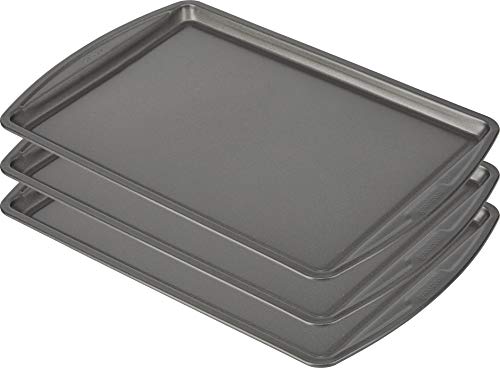
SET OF 3 BAKING SHEETS: GoodCook’s Nonstick Cookie Sheet Set comes with three 13 x 9-inch baking sheets to bake your favorite recipes from cookies, desserts, and tasty sheet pan dinners
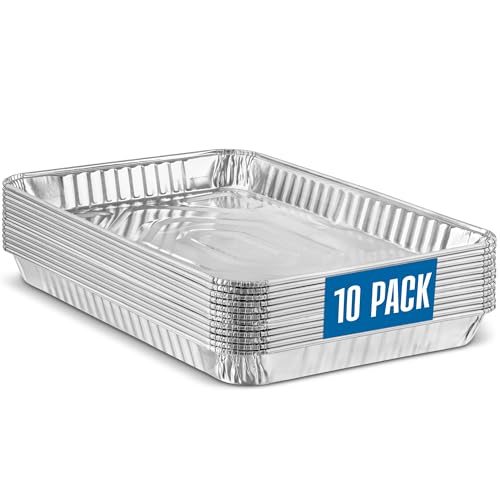
Disposable sheet pans for your convenience. Save yourself from hours of scrubbing and cleaning metal sheet pans.Foil pans are also stronog enough to be washed and reused if desired.
What Pan Do You Need to Bake a 1/4 Sheet Cake?
Whether you’re crafting a celebration centerpiece or a weeknight treat, selecting the right vessel sets the foundation for everything that follows. You’ll reach for a quarter sheet pan, that trusty 9×13 rectangle found in home kitchens across the country. This pan delivers roughly twenty to twenty-four servings of 2×2-inch pieces, though your batter’s consistency and oven’s temperature affect those numbers. Some bakers use 8×12 or 9×12 variations, which produce slightly different serving counts.
| Pan Size | Typical Height | Serving Range |
|---|---|---|
| 9×13 inches | 1–2 inches | 20–24 pieces |
| 8×12 inches | 1–2 inches | 16–20 pieces |
| 9×12 inches | 1–2 inches | 18–22 pieces |
| 10×14 inches | 1–2 inches | 24–28 pieces |
Your final serving size depends directly on these pan dimensions and the thickness at which you cut the cake.

Ideal for any recipe - Designed for sheet cakes, brownies, blondies, pastries, bar-type cookies, casseroles, lasagnas and roasts.

Naturals commercial bakeware is made of pure aluminum which will never rust for a lifetime of durability. Foods bake and brown evenly due to aluminum’s superior heat conductivity.
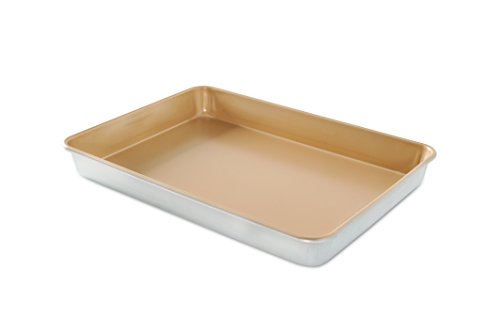
Baked goods rise and bake evenly due to aluminums superior heat conductivity and the reinforced encapsulated steel rim prevents warping
Can You Double a Recipe to Make Two 1/4 Sheets?
Doubling a recipe to produce two quarter sheet cakes is entirely within your reach. This straightforward expansion transforms a single batch into twin foundations for layered creations or separate celebrations.
- Measure your doubled batter to ensure each 9 × 13 inch sheet cake receives equal volume without overflow
- Position pans with ample space between them, allowing hot air to circulate freely
- Expect pan doubling to require rotating pans halfway through for even browning
- Check bake time carefully, as two cakes may need 5–10 extra minutes depending on your oven’s characteristics
- Test doneness with a toothpick, seeking that perfect crumb where moistness meets structure
This technique becomes easier with patient observation and repeated practice.

NONSTICK: Swiss-engineered heavy-duty coating allows for nonstick release when baking

High-quality Material: Our sheet cake pan set includes 2PCS 12.5'' X 10'' X 2.4'' rose gold carbon steel cake pans, The baking pan are made of food-grade carbon steel material with heat-resistant and fast and even heating characteristics, with a certain weight and durability, No need to worry about harmful substances leaching into your food—our baking pan is a healthier alternative to aluminum cake pans. which can save cooking time and improve the efficiency of the kitchen, especially suitable for novices and baking enthusiasts

Embossed grid pattern enhances the look and performance of our hugely popular baking pans
How Do You Cut a 1/4 Sheet Cake for Maximum Servings?
You’ll want to master cutting grid patterns that transform your 9 x 13 inch cake into neat, even rows and columns. By choosing between 2 x 2 inch party portions, which yield 24 servings, and slightly larger 2 x 3 inch dessert slices, you balance the number of servings against portion size. Approach your knife with confidence, measuring twice and cutting once. Clean, decisive strokes through chilled cake create a professional presentation.
Cutting Grid Patterns
The grid you choose transforms your 9 × 13 canvas from a modest rectangle into a generous feast or refined tasting, much like a composer arranging notes across bars to shape a symphony’s arc. You’re not merely slicing cake; you’re orchestrating experience, where each intersection of blade and crumb becomes a deliberate choice in your sheet cake’s final movement.
- Map your cutting grids before the first incision, sketching rows and columns like a cartographer plotting familiar territory.
- Score the 9 × 13 cake’s surface gently, creating guides that keep your portions uniform and your confidence steady.
- Wield a long, thin-bladed knife, warmed under hot water, to glide through layers without dragging or crumbling.
- Account for height: single layers demand wider cuts, while towering tiers satisfy with slender rectangles.
- Embrace the grid as your signature. Fellow bakers recognize the care in every measured slice.
Slice Size Options
How do you transform a modest 9 × 13 canvas into the right number of servings without leaving guests hungry or frosting-laden leftovers in your refrigerator? Your slice size determines the perfect gathering.
Cut your sheet cake into 2 × 2 inch squares, and you’ll yield 20–24 generous portions that satisfy without overwhelming. Prefer heartier appetites? A 2 × 3 inch grid delivers 15–20 substantial servings, each suited to celebration. For crowds that mingle and nibble, carve 1.5 × 2 inch party slices. This approach yields approximately 30 servings from the same rectangle.
How Do You Store and Transport a 1/4 Sheet Cake?
Whether you’re bringing a buttercream-finished vanilla sponge to a family reunion or delivering a fondant-covered chocolate genoise to a client’s milestone celebration, mastering the art of cake preservation and mobility requires systematic planning. This ensures every slice reaches its destination intact.
Your 9 × 13-inch creation, yielding 20 to 24 generous servings, deserves storage in a refrigerator set below 40°F, shielded from absorbing ambient odors beneath a cake dome or inverted pan. For transport, secure placement and proper handling are essential.
- Chill layers thoroughly before frosting to build structural integrity
- Invest in a non-slip mat for your vehicle’s floor or trunk
- Apply dowels through tiered constructions like architectural pillars
- Carry emergency repair buttercream in an insulated kit
- Slice with a hot, clean knife for pristine portions
Following these steps ensures your cake arrives with all servings intact.
Why Do Some Bakeries Use Different Sizes?
Why might you encounter a quarter sheet cake measuring 8 × 12 inches at one bakery and 9 × 13 inches at another, as though these dimensions were mere suggestions rather than industry standards? You’ll find this variation stems from practical considerations that shape every kitchen’s relationship with sheet cake production. When you select pan sizes for your quarter sheet, you’re joining a tradition where regional preferences and equipment availability guide your choices. Some bakeries favor the compact 8 × 12 inch silhouette, while others use the 9 × 13 inch canvas, each decision reflecting what works best in that specific space. These differences don’t diminish your craft. They reflect the adaptability required in baking, where precision and flexibility both matter when producing consistent results with different pan sizes.
Where Did the 9 × 13 Size Come From?
The 9 × 13 inch quarter sheet cake grew out of a fascinating convergence of home baking culture and commercial practicality that you can still trace in kitchens today. This sheet cake size became standard because aluminum manufacturers in the 1950s standardized pans that fit perfectly in domestic ovens while yielding generous portions for neighborhood gatherings.
- You’re holding decades of American baking history in that rectangular vessel
- The quarter sheet mirrors the golden ratio of home hospitality: substantial yet manageable
- Your 9 × 13 pan nests beautifully with half and full sheets in professional bakeries
- Commercial kitchens adopted this size because consistency matters for standardized production
- This dimensional dominance demonstrates how collective habit shapes culinary tradition
What Should You Tell Your Baker When Ordering?
How precisely should you communicate your vision when placing that order, so what arrives matches the celebration you’re imagining? You’ll want to specify exact pan dimensions: 9 × 13 inches, 8 × 12, or 9 × 12. These variations directly affect your sheet cake’s proportions and serving capacity.
Tell your baker your expected serving size too. Are you cutting generous 2 × 2 inch portions for twenty guests, or slender slivers for a larger crowd? Mention height preferences. A single layer creates a streamlined presentation, while stacked tiers provide visual impact.
When you articulate these details, you’re establishing clear expectations between yourself and your baker. Your specificity ensures the final product matches your actual needs, resulting in the centerpiece that brings everyone together, slice by slice.