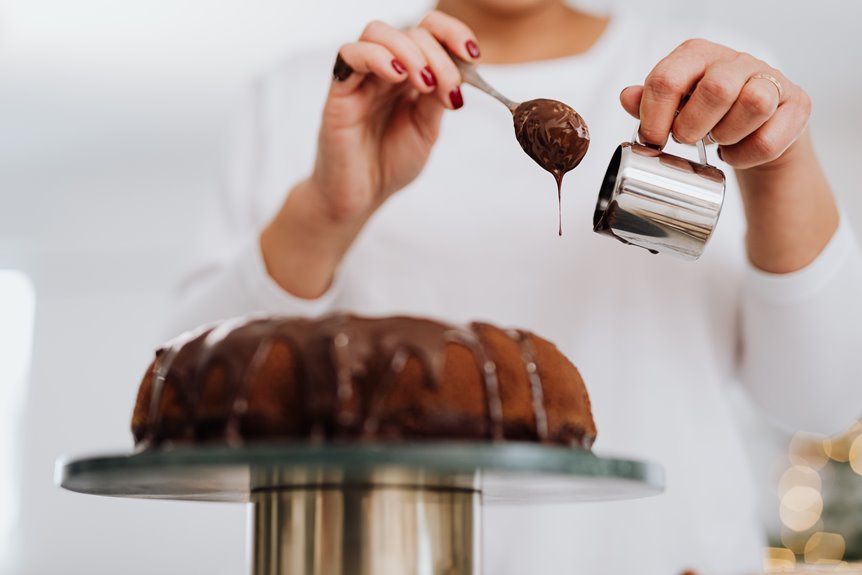
You need to cool your cake completely before frosting, or your buttercream will slide into a puddle. Cooling times vary by cake type: cupcakes need 15–30 minutes, layer cakes need 1–2 hours, and dense Bundts need 2–3+ hours. The first 10–15 minutes should happen right in the pan before you turn it out onto a wire rack, where air circulation speeds cooling.
Test readiness by hovering your palm above the surface and feeling for any residual warmth. If you need to speed up the process, a brief refrigerator stint after initial cooling can help, though patience is the most reliable approach. Master these timelines, and your frosting will set properly instead of sliding off the cake.
How Long Should a Cake Cool? The Real Timeline

Why does patience matter so much when you’re standing before a warm, fragrant cake that seems to whisper, “Frost me now”? Rushing destroys everything you’ve built. Your cooling time begins with ten minutes in the pan, then ten minutes on a wire rack. This isn’t arbitrary; it’s your foundation. After that, you’re waiting at room temperature, typically an hour or more, though denser cakes demand longer patience while cupcakes surrender faster. You’ll know it’s ready when hovering your hand detects zero warmth. Yes, you can accelerate cooling in the fridge or freezer after that initial rest, but frosting too early creates sliding disasters and melted frosting. Cut layers, use that rack, and embrace the wait. This is how cakes are properly finished.

QUALITY STAINLESS STEEL CONSTRUCTION: Made from food grade stainless steel instead of metal plating or coating, the grill is stronger, more durable, less likely to rust, warp or bend and safer

𝟏,【𝐏𝐑𝐄𝐌𝐈𝐔𝐌 𝐐𝐔𝐀𝐋𝐈𝐓𝐘】The cooling rack is composed entirely of stainless steel without any harmful coatings. To meet your baking needs, we have chosen for you the substantial material on the market: food-grade stainless steel.

STURDY STAINLESS STEEL CONSTRUCTION: Our baking cooling rack is made of quality materials, prevents bending or deformation when carrying heavy loads. Smooth polished surface of cookie cooling rack without coating or plating, no burrs, no rust, no peeling, protect your daily food safety
Cooling Times for Every Cake Type (From Cupcakes to Bundt)

Not every cake requires the same cooling time. Recognizing these differences helps bakers achieve consistently good results. Cooling time varies significantly across your baking repertoire, from petite cupcakes to sculptural Bundts, each requiring its own specific rest period before decorating.
| Cake Type | Approximate Cooling Time |
|---|---|
| Cupcakes | 15–30 minutes |
| Layer cakes | 1–2 hours |
| Bundt/dense cakes | 2–3+ hours |
Let your creations rest in-pan for 10–15 minutes, then transfer them to a wire rack where air circulates freely. Avoid rushing this step. A cake must be fully cool, with no lingering warmth beneath your palm, before buttercream meets crumb. Waiting ensures flawless finishes and prevents frosting from melting into the cake.

Solid Stainless Steel Construction - No plating, no coating, don't worry about unhealthy stuff getting into your food, as baking partner for daily use while staying maximum durability

HEAVY DUTY STAINLESS STEEL STURDY DESIGN: Set of 2 cooling racks for half sheet baking pans are food-safe, professional grade 304 (18/8) stainless steel with strong, heavy duty wire grids, small holes, smooth no-snag edges, and a full 1 inch height resulting in greater all around airflow for even cooking, cooling and roasting every time

🍪PREMIUM STAINLESS STEEL CONSTRUCTION: The cooling rackis made of food-grade stainless steel without metal plating or coating, durable use for many years, less prone to rust, prevent bending or warping when bearing heavy food, Smooth edges without rough spurs to protect your hands. This baking rack serves as a baking companion for daily use while maintaining maximum durability.
How to Tell Your Cake Is Cool Enough to Frost

How can you be certain your cake has cooled sufficiently before frosting it with buttercream? Hold your palm a few inches above the cake’s surface to check for residual heat. When you feel no warmth, the cake is ready for frosting.

【Collapsible 4 tier Cooling Rack】 Features a sturdy construction with a collapsible & adjustable design. Geesta wire cooling rack works works well for everything, from small items like cupcakes and muffins to large pies and cakes of significant weight.

100% Solid 304 (18/8) Stainless Steel Construction - No metal platings or coatings that can chip or scratch and transfer toxins/chemicals to your food the way non-stick racks can. They also won’t rust, warp or bend.
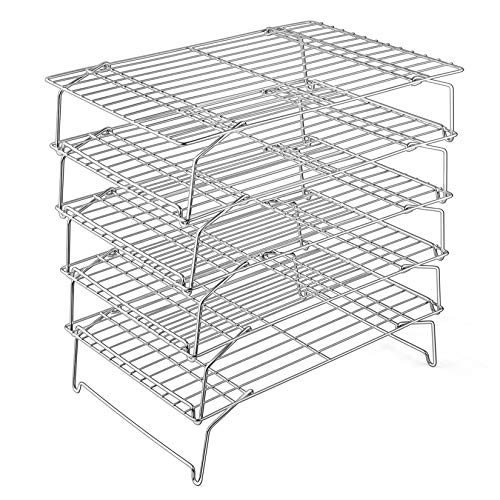
【OVEN & DISHWASHER SAFE】 These cooking racks perfectly fit most regular oven for baking and roasting, Raised feet and equidistant wires provide optimal air circulation around the food for baking evenly and quickly, Dishwasher safe to save your cleaning labor and reduce the hassle after using, Also hand-wash easily
Cool Your Cake Faster (Without Ruining the Texture)
Once you’ve confirmed your cake has reached that perfect state of coolness, you might find yourself glancing at the clock and wondering if there’s a swifter path to frosting freedom. You’re not alone in this kitchen impatience, fellow baker, and the good news is you can accelerate cooling without sacrificing that tender, velvety crumb you’ve worked so hard to achieve.
| Your Patience Level | Your Cooling Strategy | The Reward Awaiting You |
|---|---|---|
| Steady and calm | Rest on wire rack for 60 minutes | Perfect texture, guaranteed success |
| Moderately eager | Wire rack plus gentle air circulation | Faster results, still flawless |
| Racing the clock | Brief fridge/freezer stint after initial cooling | Speed with safety, no compromise |
| Utterly desperate | Fridge/freezer with careful monitoring | Frosting freedom, texture intact |
| Wise and tested | Touch-test confirms zero warmth | The sweet victory of perfect cake |
Begin by letting your cake rest in its pan for just 10 to 15 minutes, then flip it onto a wire rack where air circulates freely around every surface. If time presses upon you like a heavy lid, transfer that rack to the fridge or freezer. Before frosting, use your fingertips to confirm the cake has cooled completely with no residual warmth.

SUPERIOR QUALITY: BRIOUT cooling rack is made of solid stainless steel which is durability and resistant to bending and rust. The grid are firmly welded to serve food steadily

HEALTHY MATERIAL - E-far round cooling racks are made of pure stainless steel to ensure no harmful substance into food, Rust free and healthy racks to meet your daily kitchen use

Baking cooling rack made of heavy weight metal wire with non-stick coating, not rust.
Frosted Too Soon? How to Salvage a Warm Cake
Picture yourself standing before your cake, spatula mid-air, as you watch the buttercream begin to glisten and slide like snow melting on sun-warmed stone. This is the moment every baker dreads, yet it happens to the most careful among us.
Buttercream melting like sun-warmed snow: every baker’s dreaded moment, even the careful ones.
You rushed the cooling, didn’t you. Now your frosting weeps and pools, refusing its pretty peaks.
First, stop spreading. You’ll tear the crumb and deepen the damage. Instead, chill the cake immediately for fifteen minutes minimum, letting the cold firm the buttercream. The heat retreats, the sugar sets, and you regain control.
For future success, practice patience. Press your palm against the cake’s center and feel for lingering warmth. Wait until none remains. A cool sponge welcomes frosting without resistance, unlike a warm one.
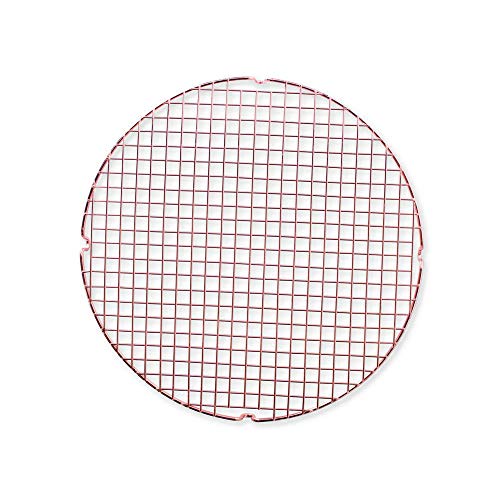
Gorgeous copper-plated circular steel wire grid
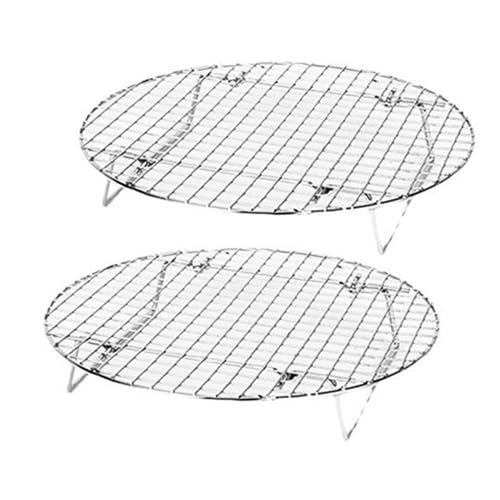
Well Made Cooling Racks: Versatile, great quality, sturdy, cleaning is a breeze

HEALTHY: TeamFar round cooling rack is made of pure stainless steel, No worries about any toxic chemical substance into your food, Provide you a safer and healthier using experience