
A groom’s cake is your chance to craft an edible autobiography that stands apart from the traditional white-tiered wedding cake, honoring your fiancé’s passions through bold flavors like bourbon-soaked sponge or dark chocolate ganache and sculptural designs that transform buttercream into storytelling.
These designs might include a vintage motorcycle rendered in fondant or a toolbox complete with edible wrenches.
Rooted in 19th-century British tradition and carried across the Atlantic to flourish in Southern wedding culture, this secondary confection operates as a counterpoint rather than competitor, balancing ceremonial grandeur with individual expression through techniques like airbrushing, hand-painted cocoa butter transfers, and structural engineering that would make any pastry artisan proud.
You might unveil it at the rehearsal dinner as a conversation piece or save it for a late-night reception surprise when guests crave something beyond vanilla buttercream.
Expect to invest $100–$300 for a creation that signals intentionality rather than obligation.
The tradition matters because it invites your guests into the full texture of your shared story.
Wedding celebrations can honor both collective ritual and singular identity without sacrificing either, and the groom’s cake serves as a tangible expression of that balance.
What Is a Groom’s Cake, Exactly?

A wedding celebration offers multiple opportunities to honor the couple at its center. The groom’s cake, a secondary confection served at the wedding reception, reflects the groom’s personality through flavors and design. Unlike the traditional white-tiered wedding cake, this cake showcases the groom’s hobbies and interests. Examples include a chocolate stout cake shaped like his fishing boat or a red velvet cake carved into his beloved retriever’s likeness. The designs transform buttercream into personal details, allowing guests to taste his preferences and allegiances. Whether displayed as an edible sculpture or sliced after speeches, the groom’s cake invites guests deeper into the couple’s story, demonstrating that marriage, like baking, rewards those who balance sweetness with substance.
Where Did Groom’s Cakes Come From?
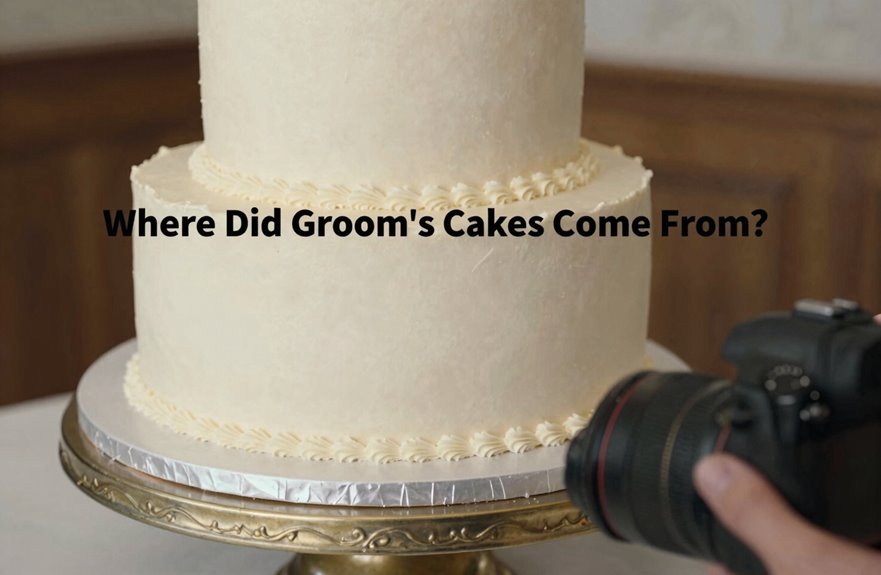
Tracing this confection back to its roots reveals how a Victorian ritual crossed the Atlantic and established itself in American tradition. The groom’s cake originated in late 19th-century Britain, where it emerged as part of a three-cake spectacle before becoming a distinct tradition. British colonists carried this custom aboard ships bound for the New World, establishing it particularly deep in Southern soil.
The hallmarks are distinctive: dense, alcohol-soaked fruitcake with the masculine flavors Victorian palates favored, transformed through American ingenuity into darker, more luxurious expressions. In Southeastern gatherings, unmarried women traditionally pocketed slices like edible fortune cookies, with each bite symbolizing matrimonial luck. This once-rigid custom has evolved significantly. It now bends toward personal preference, becoming a canvas where individual identity replaces formulaic ritual.
Groom’s Cake vs. Wedding Cake: What’s the Difference?

You’ll notice the groom’s cake stands apart from its ceremonial counterpart through bold flavor profiles and unapologetic personalization. Dark chocolate ganache or bourbon-soaked sponge replaces the wedding cake’s classic vanilla bean buttercream, and fondant sculptures of vintage motorcycles or gaming consoles replace cascading sugar roses. While the wedding cake embodies timeless elegance and shared tradition, the groom’s cake operates as a canvas for individual expression, transforming confectionery into autobiography through techniques like hand-painted cocoa butter transfers or structural rice cereal modeling that would seem out of place on the main dessert. This distinction matters because you’re choosing between two sweets with fundamentally different purposes: one serves the couple’s shared aesthetic, while the other showcases the groom’s personality and interests, allowing the reception to present both collective celebration and individual identity.
Flavor Distinctions Explained
How does a single confection manage to speak so distinctly to personal identity while residing in the shadow of its grander counterpart? The answer lies in every bold bite of a groom’s cake, where flavor becomes your declaration of self. While the wedding cake whispers vanilla elegance to please the crowd, your groom’s cake shouts with personalization; dark chocolate ganache, bourbon-soaked fruitcake, or espresso-kissed layers that mirror your actual cravings, not tradition’s expectations. This culinary choice reflects real autonomy. Research shows 20–30% of couples now claim this flavorful independence. The groom’s cake also invites you to honor heritage. Southern roots might summon a rum-drenched fruitcake, dense as family history itself. In this context, taste transcends dessert. It becomes your signature, shared among those who truly know you.
Design Personalization Compared
Beyond the plate, where flavor has spoken, geometry and symbolism now take their turn. Each tier and fondant curve declares allegiance to one vision or another. You’ll notice groom’s cake personalization immediately hijacks the spotlight from traditional confections, transforming flour and sugar into autobiography. Your wedding cake whispers unity through coordinated palettes and floral cascades, but the groom’s cake shouts his singular story through sculptural audacity.
Consider how hobbies become edible architecture:
- A chocolate ganache toolbox reveals his craft, complete with fondant wrenches
- A stratocaster replica, strings rendered in spun sugar, celebrates musical obsession
- A hyper-realistic console celebrates digital passion without apology
These design themes function as declaration. While your wedding cake bowed to ceremonial elegance, this secondary creation grants permission through specificity, allowing the groom’s identity and passions to be fully visible and celebrated.
What Does a Groom’s Cake Cost?
Where exactly does your money go when commissioning a groom’s cake, and what separates a modest confection from a showstopping centerpiece? Your groom’s cake cost typically falls between $100 and $300, though that range expands when you factor in size and design. You’re paying for buttercream architecture, ganache precision, and the baker’s artistic labor.
If your budget feels tight, you’ll find practical alternatives in choosing smaller tiers or embracing DIY techniques. A simple single-layer creation honoring his fishing obsession costs less than a multi-tiered replica of his vintage Mustang, yet both carry equal emotional weight. Your decisions about fondant versus buttercream finish, hand-piped details versus edible prints directly shape your investment. You’re commissioning edible autobiography, not simply purchasing dessert.
When Should You Serve the Groom’s Cake?
Once you’ve settled on a design that honors his story without draining your savings, you’ll face another decision that shapes how guests experience this edible tribute: the moment when you actually present and serve the groom’s cake. Your serving timing becomes part of the narrative, a punctuation mark in your celebration’s unfolding story.
Consider these distinct approaches:
- Rehearsal dinner revelation – you unveil the groom’s cake amid toasts, creating an intimate moment with your closest circle before the main event
- Reception companion – you slice it alongside your wedding cake, offering guests a dual dessert experience that honors both partners equally
- Late-night resurrection – you stage a dramatic second debut when energy dips, transforming the cake into a midnight revival ritual
Each option crafts belonging differently.
Why Do Modern Couples Still Include a Groom’s Cake?
You might wonder why modern couples still carve out space for a groom’s cake when the main confection already commands so much attention. The answer unfolds across three compelling dimensions that transform this tradition from mere novelty into meaningful celebration.
You’re essentially commissioning a secondary canvas for personal expression, where sculpted fondant might render your partner’s vintage Chevrolet in buttercream relief or pixelate their favorite video game into edible art. This simultaneously unlocks flavor diversity that breaks the monologue of classic vanilla bean and almond sponge. By continuing this sentimental thread, you’re not simply upholding a regional custom. You’re weaving your own narrative into the wedding’s gastronomic tapestry, creating a shareable moment that feels both deliberately crafted and warmly familiar, like finding an unexpected harmony between heritage and contemporary taste.
Personal Expression Opportunity
Why does a single dessert command such devoted attention in an era of minimalist weddings and streamlined budgets? The groom’s cake has reclaimed its place as a canvas for personal expression, where personalization transforms sugar and fondant into autobiography.
This tradition invites three deliberate choices that celebrate identity:
- You select imagery that mirrors his passions, perhaps a vintage vinyl record spun from modeling chocolate, or a hand-painted fishing lure cascading down buttercream tiers
- You collaborate with pastry artisans who translate hobbies into edible sculpture, employing techniques like airbrushing, hand-molding, and structural engineering
- You orchestrate the reveal as narrative punctuation, positioning this confection as counterpoint to the wedding cake’s ceremonial grandeur
In an age where you’ve curated every detail for shared meaning, the groom’s cake offers something rare: a dedicated space where his story stands alone, specific and witnessed by those who know him best.
Flavor Diversity Option
Beyond the visual statement lies another compelling reason this tradition persists: the freedom to explore flavors the main wedding cake often cannot accommodate. You embrace this opportunity wholeheartedly, recognizing that your wedding deserves more than a single, safe vanilla choice. The groom’s cake flavors you select become a declaration of individuality, a rich chocolate ganache or spiced carrot cake standing in delicious defiance of convention. This flavor diversity transforms your celebration into something multidimensional, where guests discover unexpected pleasures alongside familiar favorites. You’re not merely feeding people; you’re curating experiences that reflect your authentic palate. Through bold combinations and adventurous profiles, your personal expression extends beyond decoration into every bite, creating belonging through shared, surprising delight.
Sentimental Tradition Continuation
Where does a tradition find its footing when the world around it shifts dramatically? Southern wedding culture provides the answer through the groom’s cake, which anchors itself not to flour and sugar, but to collective memory and identity. Though only 20–30% of contemporary celebrations feature this element, its prevalence climbs alongside generous budgets and rehearsal-dinner showcases, revealing how personalization preserves meaning.
This tradition operates through three distinct pathways:
- Regional Heritage: You honor cultural continuity, embracing the South’s commitment to preserving wedding customs against homogenization.
- Identity Expression: You commission designs reflecting the groom’s passions; sports helmets rendered in fondant, vintage guitars in modeling chocolate, pixelated landscapes from buttercream. These designs embed individuality into edible art.
- Narrative Extension: You transform the cake into a late-night reveal or decorative centerpiece, extending tradition through improvisation rather than replication.
Whether through chocolate ganache or fruitcake’s dense crumb, participation in groom’s cakes represents evolution rather than nostalgia. The tradition persists because it accommodates change while maintaining symbolic weight across generations.
What Groom’s Cake Fits Your Fiancé’s Hobby?
How do you transform your fiancé’s weekend obsessions into edible artistry? You start by embracing the groom’s cake as your canvas for personalization, where hobbies become the blueprint for unforgettable design. Envision this: your partner’s beloved football helmet rendered in fondant, or vintage gaming consoles stacked in buttercream tiers, each console a masterclass in sculpting technique. You’re not merely baking; you’re engineering edible architecture that speaks his language. The guitar-shaped cake awaits your precision, with its neck requiring dowel reinforcement and its body airbrushed to mimic worn maple. You select flavors that defy tradition, perhaps a dense chocolate ganache or vibrant red velvet, because this cake belongs to him alone. Through this personalization, you join a community of couples who understand that marriage celebrates two distinct souls, each deserving recognition.
Is a Groom’s Cake Right for Your Wedding?
Once you’ve mapped your fiancé’s passions onto fondant and buttercream, you face a practical question that affects every wedding plan: does this second confection deserve a place in your celebration, or does it risk crowding an already full dessert table?
Weigh your decision through three lenses:
- Personal significance: Does this groom’s cake honor a story only you two share, transforming sugar into shared memory?
- Timing: Will you unveil it at the rehearsal dinner, where intimacy amplifies its impact, or at the reception as a dramatic counterpoint to the wedding cake’s elegance?
- Budget harmony: Can you allocate $100–$300 without sacrificing elements that matter more to your collective vision?
When these elements align, you have your answer.