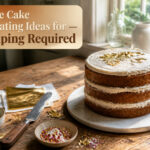

You’ll recognize a Lambeth cake by its architectural, gravity-defying royal icing, where overpiped shells, scrolls, and lattice stringwork stack like edible baroque stonework across tiered canvases. Born from Victorian tearoom formality and codified by Joseph Lambeth’s 1934 masterwork, this technique demands you wield your piping bag with sculptor’s precision, building dimensional patterns through steady pressure control that transforms sugar into porcelain-hard filigree. What makes it special is the discipline of symmetry, the romance of handcrafted authenticity, and the conversation between history and your own creative voice, whether you choose traditional ivory pastels or contemporary cobalt and coral statements. Master this, and you’re continuing a lineage of edible architecture that social media has brought back into prominence, where your next creation can establish its own distinctive presence.
What Makes a Lambeth Cake Instantly Recognizable?

Picture yourself standing before a cake so elaborately decorated that you might momentarily mistake it for carved porcelain, and you’ll begin to understand why the Lambeth style commands immediate recognition. You’re witnessing the Lambeth Method in its full glory: intricate Royal icing piped across multiple tiers with delicate scrolls, swags, and layered stringwork that demands precise pressure control from your steady hand. The symmetry draws you in, each tier building upon the last like Baroque architecture rendered in sugar. Traditional white or pastel palettes honor heritage, though you’ll find contemporary bakers embracing bolder colors for modern expression. This textured, dimensional appearance, achieved through overpiping techniques popularized by Joseph Lambeth in the early-to-mid-20th century, creates a highly decorative silhouette that separates craft from mere decoration. The method transforms patience into edible art through technical skill and meticulous execution.
Inside the Gravity-Defying Piping That Defines the Style

How do you coax royal icing into hovering arches and cascading garlands that seem to float above the cake’s surface, defying every expectation of what sugar should be capable of? You master the Lambeth style by wielding your piping bag like a sculptor’s tool, applying pressure with the steadiness of a heartbeat, building shells, scrolls, and stringwork across tiers like architectural blueprints rendered in sugar. Your piping decoration demands repetition as both teacher and test; each layer of overpiping adds dimension until baroque grandeur emerges from patience. You plan meticulously, mapping symmetry before the first squeeze, following Joseph Lambeth’s method while finding your own rhythm. The cake becomes your canvas, smooth foundations yielding to delicate, hovering filigree in pastel or bold colors, tradition or innovation. You join a lineage where steady hands transform humble icing into gravity’s gentle defiance.
Royal Icing or Buttercream: Which Holds Up Better?

You’ll stand before your Lambeth cake and face the eternal pastry chef’s dilemma: royal icing, with its sugar-firm armor that hardens like porcelain to cradle your most ambitious stringwork, or buttercream, that yielding, workable medium that forgives your hesitant hand yet demands constant vigilance against temperature’s betrayal. The structural integrity comparison isn’t merely academic. It’s the difference between piping that floats, defiant and crisp, or droops, softly surrendering to gravity’s patient pull. As you weigh flavor against stability, remember that decorative longevity factors extend beyond the reception hall, for royal icing’s crystalline shell preserves your lacework like museum glass, while buttercream requires acceptance of impermanence. Its gentle smudging reflects the reality that even mastery shifts and eventually settles.
Structural Integrity Comparison
Where exactly does the hidden tension lie when you’re building a cake that must stand tall, look flawless, and survive hours under display lights? You’re balancing artistry against gravity itself, and your choice between Royal icing and Buttercream becomes the foundation of that battle.
| Factor | Royal Icing | Buttercream |
|---|---|---|
| Flexibility | Brittle, cracks under stress | Forgiving, absorbs movement |
| Humidity response | Blooms, loses shine | Softens, stays pliable |
| Weight distribution | Fragile shell | Even, stable support |
| Piping precision | Crisp Lambeth lines | Modern layered tiers |
| Best application | Decorative sugar work | Core structural integrity |
The hybrid approach offers the most reliable solution. Let Royal icing carry your intricate piping while Buttercream shoulders the load. This combination prevents structural failure and ensures a cake that maintains its appearance throughout display without deteriorating.
Flavor Versus Stability
Structural integrity might keep your tiers standing, but you’re still left with the question that haunts every decorator at midnight: will your masterpiece taste as magnificent as it appears, or will your guests chip a tooth on sugar cement while admiring your handiwork. You face a choice between two options. Royal icing, that glass-hard sentinel of precision, delivers crystalline detail but threatens dental peril and weeps in humidity’s embrace. Buttercream, the velvet diplomat, offers luscious mouthfeel and temperature resilience while sacrificing razor-sharp definition. Your Lambeth piping demands both: crisp scrollwork and palatable pleasure. Seasoned decorators often marry the two, laying Royal icing’s skeleton beneath Buttercream’s forgiving flesh. This hybrid approach resolves the conflict between visual precision and eating quality, directly affecting how your guests experience each slice and what they remember about your work.
Decorative Longevity Factors
Your cake’s survival through the reception and perhaps beyond depends on a decision you’re making at the mixing bowl, where royal icing’s armor and buttercream’s gentleness diverge into two distinct futures. Royal icing hardens into glossy, structural scaffolding that preserves your overpiping, run sugar plaques, and basketweave precision for years when humidity stays away. You’re building edible architecture that refuses to wilt. Buttercream, meanwhile, demands your vigilance; its creamy softness risks cracking or sweating unless you chill it properly and reinforce with fondant supports, especially for towering, multi-tier designs. Yet both paths lead to preservation when you control display conditions. Royal icing outlasts buttercream in raw endurance, but you’re not choosing weakness with buttercream. You’re choosing a different discipline, one where pressure and temperature become your collaborators in defying time.
Joseph Lambeth and the Legacy of English Overpiping
How did a single decorator’s journey across the Atlantic transform buttercream from humble kitchen staple into a medium of architectural precision? Joseph Lambeth provides the answer. His 1934 publication, *The Lambeth Method of Cake Decorating and Practical Pastries*, codified the techniques recognized as English overpiping today. Lambeth didn’t invent this layered piping style, yet he became its champion by blending British tradition with American innovation until the two merged into something entirely new. His influence persists through nine printings of his book, each one teaching decorators to control pressure with surgeon-like steadiness and build dimensional patterns that seem to grow from the cake itself. His school, competitions, and exhibitions established a lineage of craftspeople who elevated royal icing from mere coating to sculptural language.
Why Lambeth Cakes Disappeared: and Why They Came Back
When exactly did the intricate lattice of royal icing that once crowned wedding tables become a relic you’d only find in your grandmother’s photo albums? You watched minimalism sweep through the late twentieth century like a tide pulling sand from shore, as fondant’s smooth, sculptural appeal eclipsed Lambeth cake traditions, leaving overpiped elegance stranded in memory.
| Era | Character |
|---|---|
| Decline | Minimalism and fondant dominate, royal icing gathers dust |
| Spark | Nostalgia ignites, you crave handcrafted authenticity |
| Surge | Instagram and TikTok amplify artists piping Lambeth tutorials |
| Access | Workshops and specialized tools welcome you into the fold |
Social media now democratizes techniques once guarded by guilds. You’re witnessing vibrant reinterpretations bloom across platforms, yet traditional piping remains your foundation, connecting you with a community of capable hands reclaiming edible architecture.
Modern Lambeth Cakes: Bold Colors and Fresh Takes
Where might you take a technique born in the hushed formality of Victorian tearooms and push it somewhere your great-great-grandmother would barely recognize? Today’s Lambeth Cakes answer that question through modern color blocking that transforms the once-demure palette into electric statements. You’re painting with royal icing now, laying down fields of cobalt, coral, and jet black between layers of precise overpiping. You haven’t abandoned the method’s soul. Your hand still commands consistent pressure, and your eye still seeks symmetry across cascading tiers. Yet you’re weaving geometric patterns, brushed metallics, and botanical fantasies through the traditional lattice. Social media pulls you into a community where tutorials democratize what once required guild apprenticeship. You’re blending heritage with your own aesthetic, honoring Lambeth’s discipline while claiming space for bold, personal expression.
Is a Lambeth Cake Right for Your Celebration?
When you’re weighing whether a Lambeth cake suits your occasion, you’ll find its architectural grandeur and precision piping adapt with surprising versatility across celebrations. From weddings where cascading royal icing garlands mirror the ceremonial gravity of the moment to birthdays that command attention through towering tiers and scrollwork as intricate as lace, this style delivers visual impact.
Event theme matching possibilities align with your vision through the style’s adaptable palette. You can choose the classic ivory and blush of Joseph Lambeth’s 1930s legacy or contemporary saturated hues that transform the same shell-and-ruffle vocabulary into something utterly modern, like a peacock’s plumage rendered in buttercream.
Selecting a Lambeth cake means commissioning an edible sculpture. Every squeeze of the piping bag and every measured application of pressure to achieve those gravity-defying overpiped details represents a conversation between your celebration’s character and a craft that requires technical skill and patience to execute properly.
Wedding Day Elegance
Why settle for ordinary when your wedding dessert could become an edible monument to precision and artistry? A Lambeth cake transforms your reception into a gallery of sugar architecture, where royal icing scrolls, shells, and garlands cascade across tiered layers like baroque embroidery frozen in time.
You’ll discover three reasons this style elevates your celebration:
- Symmetry creates harmony through mirrored piped elements that establish visual rhythm and draw guests into shared wonder.
- Texture becomes conversation as the dimensional stringwork invites fingertips and cameras alike, making your cake the reception’s focal point.
- Customization tells your story whether you choose classic ivory or bold contemporary hues, with motifs that serve as your wedding decoration’s distinctive mark.
This isn’t merely dessert; it’s a regal centerpiece where precision meets romance and you, the couple, claim your place in a continuing tradition.
Birthday Statement Piece
How might you transform an ordinary birthday into an occasion that lingers in memory like a perfectly executed buttercream rose. You choose a Lambeth cake, whose ornate decoration becomes your celebration’s architectural heart. The multi-tiered structure, hand-piped with scrolls, swags, and stringwork, demands precision. Your pressure control determines whether roses bloom or collapse. You’re crafting baroque sugar architecture, each symmetrical tier a testament to Victorian techniques reborn.
| Element | Traditional Approach | Your Modern Twist |
|---|---|---|
| Palette | White or pastels | Bold jewel tones or metallics |
| Structure | Three-tier symmetry | Asymmetrical cascading tiers |
| Piping Style | Classic overpiping | Minimalist line work |
| Personalization | Monogram | Hand-painted story motifs |
This handcrafted centerpiece, whether marking eighteen or eighty, welcomes you into a tradition where skill meets celebration. You’re building edible heritage that guests circle, photograph, and remember.
Event Theme Matching
Wherever your celebration unfolds, whether beneath crystal chandeliers in a restored manor garden or against the clean lines of a downtown loft, you’re asking your dessert to speak the same visual language as your venue, your florals, and your gathered guests. A Lambeth Cake rises to this challenge with architectural precision, its baroque sugar piping bridging centuries of craft. Your event theme matching journey demands three considerations:
- Venue harmony: Assess whether your space craves the cake’s ornate scrollwork or competes with it.
- Color narrative: Select palettes, from ivory to jewel tones, that echo your story without overwhelming.
- Photographic intention: Position the cake where natural light catches its dimensional stringwork, creating depth your photographer will treasure.
This tradition offers belonging whether you embrace heritage or reimagine it for modern eyes.