
You’ll transform your frozen wedding cake into a celebration-worthy dessert by following a deliberate, multi-day thawing process that preserves both flavor and sentiment. Start by moving your cake, still wrapped in its protective armor of plastic and foil, into the refrigerator for 24 to 48 hours. Never place it on the counter, where condensation becomes the enemy of delicate buttercream and fondant alike. Once gently defrosted, unwrap your treasure and let it rest at room temperature for a final 60 to 90 minutes, allowing the sponge to warm through completely. Slice with care and savor the result. Should any sogginess emerge, a quick pass through a low oven will restore that crisp exterior. The journey from freezer to fork requires patience, care, and attention to small details. These same principles ensure the sweetest results and reveal the complete timeline for mastering this edible heirloom.
How to Defrost Wedding Cake: The Full Timeline (1–3 Days)
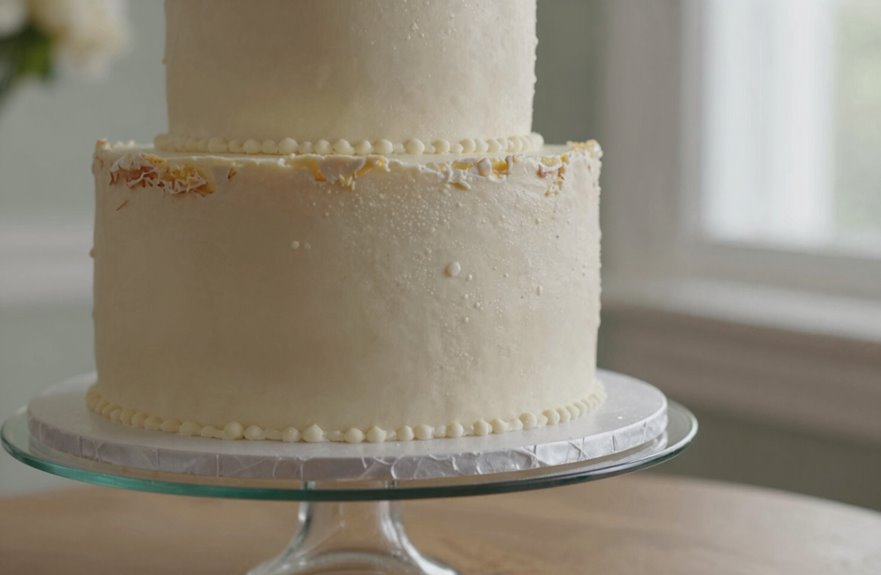
Unwrap your wedding cake’s frozen storage with patience, because preserving a year of anticipation requires a methodical approach that balances cold, cool, and optimal temperatures. Your defrosting timeline depends on scale: a whole tier requires 24–48 hours for proper refrigerator thawing, while individual slices thaw in mere hours. Keep your wedding cake in its original packaging to protect it from the refrigerator’s dry air and odors. After the slow refrigerator thaw, allow your cake 60 to 90 minutes at room temperature before slicing. This prevents soggy crumb or crumbling frosting. This gradual process, from frozen to ready, preserves texture and restores flavor when you follow each step carefully.
Start Thawing in the Fridge (Never the Counter)
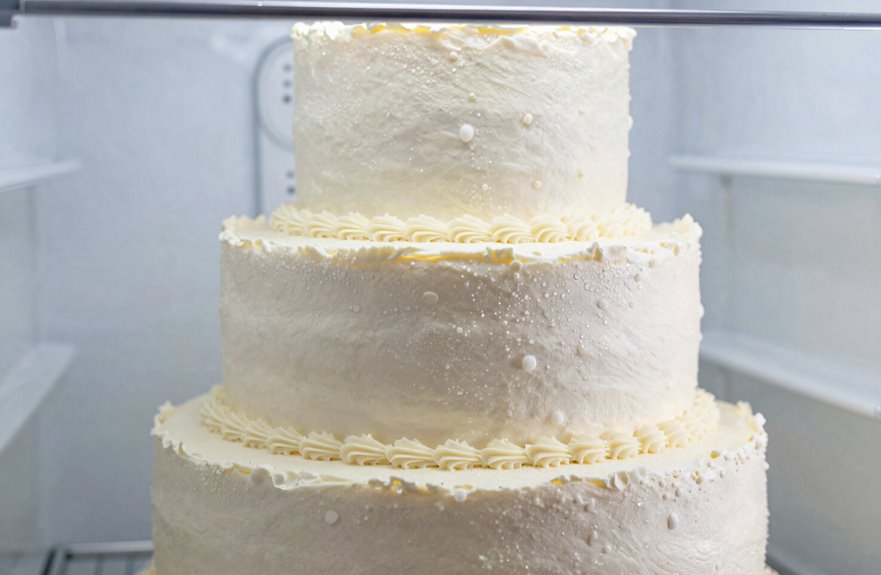
Where exactly should you begin when you’re ready to revive that frozen symbol of celebration? You’ll start your defrosting journey in the refrigerator, a sanctuary of steady coolness that protects your precious cargo from the chaotic sogginess of countertop thawing. Place your top tier inside, still swaddled in its packaging like a sleeping heirloom, because removing that protective layer now invites condensation’s unwanted embrace. Your fridge thaw requires patience: twenty-four to forty-eight hours for a whole tier, or one to two hours for wrapped slices. This wedding cake care ritual preserves frosting integrity and decorative details through controlled temperature transition. Resist the counter’s tempting speed; true preservation requires patience rather than convenience.
Bring Defrosted Cake to Room Temperature
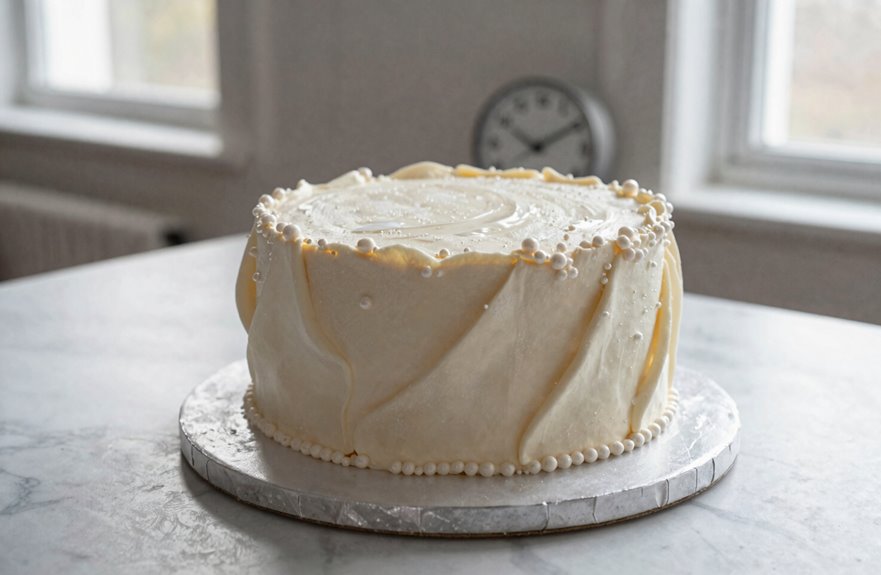
How should your cake complete its journey from frozen memory to present delight? You’ve followed the thawing guidelines, keeping your wedding cake snug in its packaging inside the fridge, and now patience earns its sweetest reward.
| Stage | What You Do |
|---|---|
| Fridge Rest | Keep wrap intact for 24–36 hours of gentle defrosting |
| Whole Tier? | Extend fridge time to 1–2 days for even thawing |
| Unwrap Carefully | Remove packaging at room temperature |
| Final Rest | Let sit 60–90 minutes before slicing |
Resist rushing this finale. Bringing your cake to room temperature too quickly invites disaster, as condensation forms, textures suffer, and your labor collapses into sogginess. Instead, follow the gradual shift from cold to comfortable; wrapped security yields to open air only when the moment arrives, with moisture locked within each crumb awaiting your careful hand.
Unwrap, Slice, and Serve
When the moment finally arrives, have you prepared yourself for the transformation that awaits beneath layers of protective wrap. You’ve nursed that top tier through defrosting like a promise kept across frozen months, and now your patience blooms into celebration. Remember how you chose to wrap the whole box, creating a moisture shield against the harsh desert of freezer burn. That vigilance pays dividends now. After your careful fridge thaw, you’ve allowed the cake to breathe at room temperature, letting the fibers awaken from their cryogenic slumber. On this anniversary day, you grasp the knife with ceremonial intent, understanding that to slice prematurely courts culinary disaster. Cold cake crumbles, but temperate cake yields with grace. You’re not merely cutting dessert; you’re dividing memory itself, each portion a renewed vow, sweet and shared.
Fix Soggy or Stale Cake After Thawing
Though you’ve followed every protocol with devotion, the thawed cake before you sometimes bears the bruises of its frozen journey, presenting you with textures that resist the perfection you envisioned. When your wedding cake emerges soggy or stale after thawing, you haven’t failed. You’re simply navigating the delicate art of defrost.
First, audit your method: did you rush the room temperature phase after fridge thawing? Slow, gradual warming preserves crumb integrity, while hasty transitions invite moisture chaos. If the sponge feels soggy, you’ve likely encountered condensation trapped during thawing; gently warm slices in a low oven for five minutes to re-crisp the exterior. For stale patches, brush lightly with simple syrup to restore suppleness. Proper thawing, wrapped and deliberate, guards against these troubles. Even imperfect cake carries the sweetness of your celebration.